Stop Copying the Feed: How to Find Your Own Iceland Instead of Recreating Someone Else's
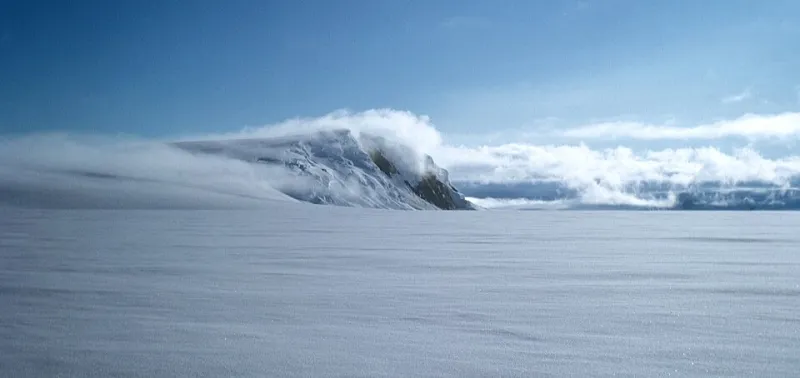
Photo: Roger McLassus, CC BY-SA 3.0, via Wikimedia Commons
You've seen the photo. Crystalline glacier lagoon, impossibly vivid teal water, a lone figure in a bright orange jacket standing at the perfect diagonal. The sky is doing something that skies, frankly, rarely do. You saved it. You showed it to your travel partner. You maybe even used it as your phone wallpaper for three weeks before the trip.
Then you got to Jökulsárlón, held up your phone, and took the shot.
And it looked... fine. Normal. Like a perfectly decent vacation photo that no one is going to save, share, or use as a wallpaper.
This experience is so common among first-time Iceland visitors that it practically has its own support group. But instead of blaming your gear, your timing, or your eye, let's talk about what's actually happening — and why the gap between the influencer feed and your own captures might be the best thing that ever happened to your photography.
The Editing Iceberg You're Not Seeing
Social media photography is a finished product. What you're looking at when you scroll through Iceland content isn't a photograph — it's a photograph plus hours of post-processing, selective color grading, luminosity masking, sky replacement in some cases, and a visual style that was probably refined over years of shooting and editing.
The teal in those glacier photos? Often pushed 30 to 50 percent more saturated than the raw file. The dramatic contrast between volcanic black sand and white foam? Frequently crushed in the shadows and blown in the highlights in ways that look cinematic on a phone screen but don't reflect the subtlety your eyes actually experienced standing there.
None of that is cheating, exactly. It's a creative choice. But it's a creative choice that's invisible to the viewer, which makes it feel like reality. And when your unedited JPEGs don't match that reality, it's easy to assume you did something wrong.
You didn't. You just saw the iceberg. The influencer showed you the tip.
Timing Is a Full-Time Job (For Them)
Here's something worth sitting with: many of the Iceland photographers you follow treat this as a profession. They return to the same locations across multiple trips. They check weather apps obsessively. They wake up at 3 a.m. during the summer solstice and stand in the rain for two hours waiting for the exact moment the light breaks through a cloud gap over Vestrahorn.
You have ten days. Maybe twelve. You've got the Golden Circle on day three and a glacier hike on day five. The logistical reality of a US visitor taking their first or second trip to Iceland is fundamentally different from someone who's spent 60 nights in the country across four years.
That doesn't mean your light won't be beautiful. Iceland's light is almost always doing something interesting. But the specific, almost supernatural light you see in those viral images? It's often the result of patience measured in years, not hours.
Knowing this changes how you approach the trip. Instead of trying to replicate a specific shot, you start watching for what's actually happening around you — the light that showed up for you, not for someone else's highlight reel.
Gear Gaps Are Real, But They're Not the Whole Story
Let's be honest about equipment for a second. A lot of Iceland's most-shared photography is shot on full-frame mirrorless cameras with wide-angle prime lenses that cost more than some people's rent. If you're shooting on a crop-sensor body or even a modern smartphone, you are working with different tools.
But here's the thing: different doesn't mean worse. It means different. Smartphone cameras in 2024 render color and dynamic range in ways that were genuinely impossible five years ago. A crop sensor with a sharp lens and thoughtful composition will produce images that hold up beautifully in any print format most travelers actually use.
The gear gap is real at the margins — in very low light, in extreme dynamic range situations, in scenarios where you need to shoot at f/1.4 to isolate a subject. But it's not the reason your photos don't look like the influencer's. Editing, timing, and intent are doing far more of that work than the sensor size.
The Psychology of the Borrowed Vision
There's a subtler problem underneath all the technical stuff, and it's worth naming directly: when you arrive at a location with a specific image in your head — one you've seen 40 times on Instagram — you stop seeing the location and start searching for the version of it that already exists.
You position yourself where the other photographer stood. You try to recreate the framing. You're essentially attempting to take a photo that's already been taken, of a place that looks slightly different today than it did when that image was captured.
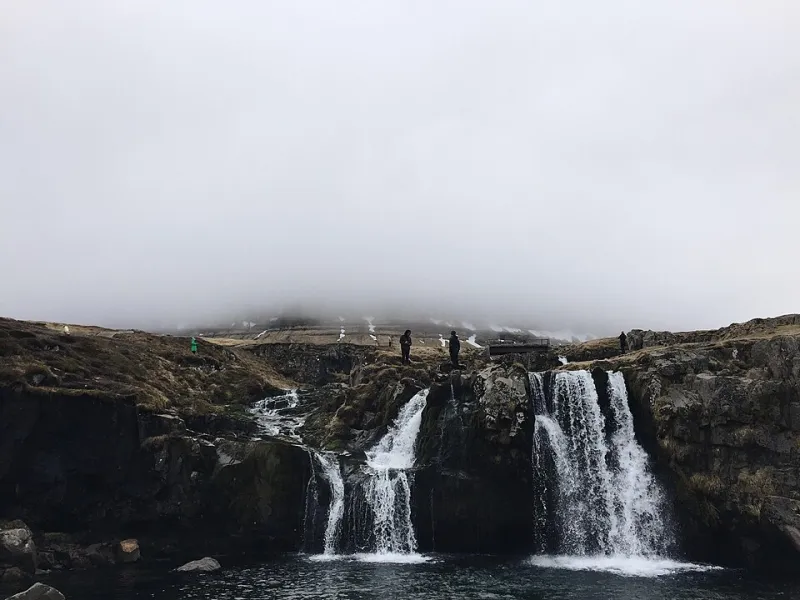
This is a creativity trap, and Iceland is particularly susceptible to it because the country's most iconic spots are so thoroughly documented. Seljalandsfoss, Skógafoss, the Diamond Beach — these places have been photographed millions of times. The "definitive" versions of those shots exist. You're not going to out-execute them with a week of shooting.
But you might find something those photographers missed. Because you were there on a different day, in different light, with a different eye and a different life behind the lens.
What "Your Version" Actually Looks Like
Developing your own visual voice in Iceland starts with one surprisingly simple shift: stop asking "how do I get the shot" and start asking "what am I actually seeing right now?"
Maybe the waterfall is backlit and blown out in a way that creates a ghostly, overexposed haze that feels more emotional than technically correct. Maybe the lupine fields along the Ring Road aren't the subject — the highway cutting through them, the truck disappearing into the distance, is. Maybe the aurora isn't doing its dramatic curtain thing tonight, but the soft green smear above a fishing village looks like a watercolor painting and feels more honest about what the northern lights actually look like in person.
These aren't consolation prizes. These are photographs. Yours.
The influencer aesthetic is a genre, like any other. It has conventions, it has rules, and it rewards people who execute those conventions well. But genres aren't the only way to work. Documentary, abstract, intimate portrait of place — Iceland supports all of it.
A Few Practical Moves That Actually Help
If you want to close some of the gap between what you're capturing and what you hoped to capture, here are a few things that will move the needle more than any new lens:
Shoot in RAW. You cannot replicate the editing latitude of a professional photographer if you're working from a compressed JPEG. RAW files give you the material to work with.
Learn one editing tool well. Lightroom Classic is the industry standard for a reason, and there are free tutorials that will teach you the basics in an afternoon. You don't need to master it — you need to understand white balance, tone curves, and HSL sliders.
Go back to the same spot twice. If your itinerary allows it, revisit a location at a different time of day or in different weather. You'll be amazed how different a place looks when you're not experiencing it for the first time.
Stop scrolling before you shoot. Seriously. Put the phone away for the 30 minutes before you arrive at a location. Let your eyes reset. See the place fresh.
Iceland Doesn't Need a Filter
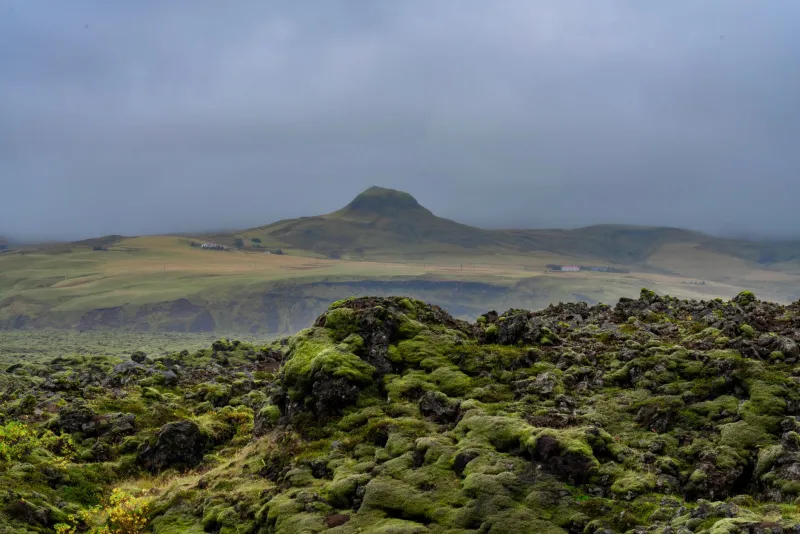
Here's the honest truth that this whole conversation keeps circling: Iceland is one of the most visually extraordinary places on the planet. It doesn't need to be made to look more dramatic. The drama is already there — in the scale, in the silence, in the way weather moves across a lava field like something alive.
The influencer version of Iceland is one interpretation of that drama. A technically impressive, heavily curated, beautifully consistent interpretation. But it's not the only one. And it's definitely not yours.
Your Iceland — the one you actually stood in, smelled, got windburned by, and watched change from minute to minute — that's worth photographing. Stop chasing someone else's highlight reel and start building your own.