Before You Lift the Camera, You Have to Hear Iceland First
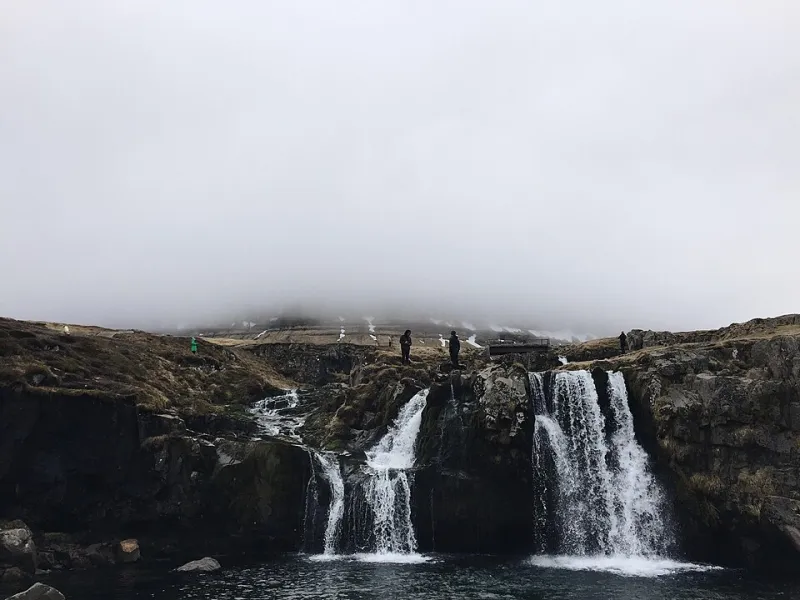
Photo: Nicholas Kampouris nicholaskampouris, CC0, via Wikimedia Commons
There's a moment that happens to almost every photographer on their first real day in Iceland. You've pulled over somewhere on the Ring Road, the landscape is doing something genuinely ridiculous — lava fields stretching toward a glacier, steam drifting off a vent in the distance — and you reach for your camera. Then something makes you stop.
It's not what you see. It's what you hear. Or, sometimes, what you don't.
Iceland has one of the most distinct acoustic environments on the planet, and it turns out that environment has a profound effect on how photographers perceive, compose, and ultimately tell visual stories. Sound, it seems, isn't just background noise. It's part of the image.
The Roar That Tells You Where to Stand
Start with Iceland's waterfalls, because the sound hits you long before the view does. Skógafoss announces itself from nearly a mile away — a low, persistent rumble that builds into something closer to physical pressure as you approach. By the time you're standing in front of it, the sound isn't just loud. It's directional. It pulls you.
Photographers who work Iceland regularly talk about using sound as a compositional guide in ways that feel almost instinctive. The roar from a falls tells you about volume and scale before your eyes have fully processed the scene. It creates an emotional register — something urgent, something massive — that shapes how you frame the shot before you've even decided on a focal length.
"I always say the ears get there first," says one landscape photographer who's been leading workshops in Iceland for six seasons. "When I'm approaching Dettifoss, the sound is so overwhelming that it starts building a frame in my head. By the time I actually see it, I already know I want something wide. The sound told me that."
That kind of pre-visualization — informed by sound rather than sight — tends to produce images with a sense of immediacy that's hard to fake in post-processing.
What Happens When There's Nothing to Hear
The other end of the spectrum is, in some ways, even more powerful.
Iceland's interior highlands — the Fjallabak Nature Reserve, the Kjölur route, the vast emptiness between Landmannalaugar and Þórsmörk — offer something increasingly rare in modern life: genuine silence. Not the quiet of a library or a suburban backyard at midnight. Real, total, almost disorienting silence.
For photographers accustomed to shooting in cities or even in popular national parks back home, this kind of acoustic void is genuinely startling. There's no ambient hum of traffic, no distant aircraft, no crowd noise. Just wind, occasionally, and the sound of your own breathing.
What's interesting is what that silence does to your eyes. Without auditory input competing for attention, visual processing seems to sharpen. Colors read differently. Small details — a patch of moss on a lava rock, the faint texture of a snow crust, the way light catches a distant ridge — become easier to notice and harder to ignore.
Several photographers describe the experience as a kind of recalibration. "The highlands basically reset your attention," explains one travel photographer based out of Seattle who makes an annual solo trip to Iceland each September. "You stop skimming. You actually look. And I think that shows up in the photos."
Sound as Mood, Mood as Composition
Here's where things get a little more philosophical, but stick with it — it's worth thinking through.
The emotional state you're in when you take a photo isn't separate from the photo. It shows up in what you choose to include in the frame, how much negative space you allow, whether you shoot wide or tight, whether you wait for the light to shift or fire immediately. Mood is compositional.
And sound drives mood more directly than almost anything else in the environment. The low, almost subsonic groan of a glacier calving creates a completely different internal state than the sharp, clean sound of wind across an empty volcanic plain. Both are Iceland. Both will produce very different images from the same photographer standing in the same light.
This is something that tends to get left out of photography education, which focuses heavily on technical settings and compositional rules. But experienced Iceland photographers will tell you that the most important variable on any given shoot isn't the f-stop or the golden hour timing. It's whether you were actually present — and presence, in Iceland, often starts with stopping and listening.
Practical Ways to Let Sound Inform Your Work
If this sounds abstract, it doesn't have to be. There are some concrete habits that photographers working in Iceland have developed around sound and perception.
Arrive early and wait quietly. Before the tour buses roll in and the crowd noise starts, locations like Reynisfjara beach or the Jökulsárlón glacier lagoon have a completely different acoustic character. That quiet shapes what you see and how you respond to it. Many photographers insist that their best shots from popular locations came in the first twenty minutes before the ambient noise level climbed.
Close your eyes for sixty seconds. It sounds a little precious, but it works. Removing visual input temporarily forces your brain to process the acoustic environment fully. When you open your eyes again, you often notice compositional elements you'd walked right past.
Pay attention to what the sound is telling you about scale. In Iceland, where the landscape operates at a scale that's genuinely hard for human perception to process, sound provides crucial context. The way a waterfall's roar echoes off canyon walls, or the way wind sounds different moving across open lava versus a narrow gorge, gives you spatial information that informs composition.
Let discomfort be a signal. Iceland's soundscape isn't always peaceful. The interior can produce wind that's physically uncomfortable, geothermal areas hiss and bubble in ways that trigger a primal wariness. Those sounds create tension — and tension, used intentionally, produces images with a genuine edge.
The Photograph You Couldn't Have Taken Without Listening
There's a reason Iceland keeps pulling photographers back, and it's not just the light, as extraordinary as that light is. It's the completeness of the sensory experience. The way the place insists on your full attention across every channel — visual, physical, and yes, acoustic.
The photographers who seem to get the most out of Iceland are rarely the ones with the best gear or the most technical skill. They're the ones who figured out, usually by accident on their first trip, that Iceland requires a different kind of attention than most places. Slower. More whole-body.
Before you lift the camera, you have to hear what Iceland is telling you. The images that follow tend to be something else entirely.