Reading the Rock: How Iceland's Ancient Geology Makes You a Better Photographer
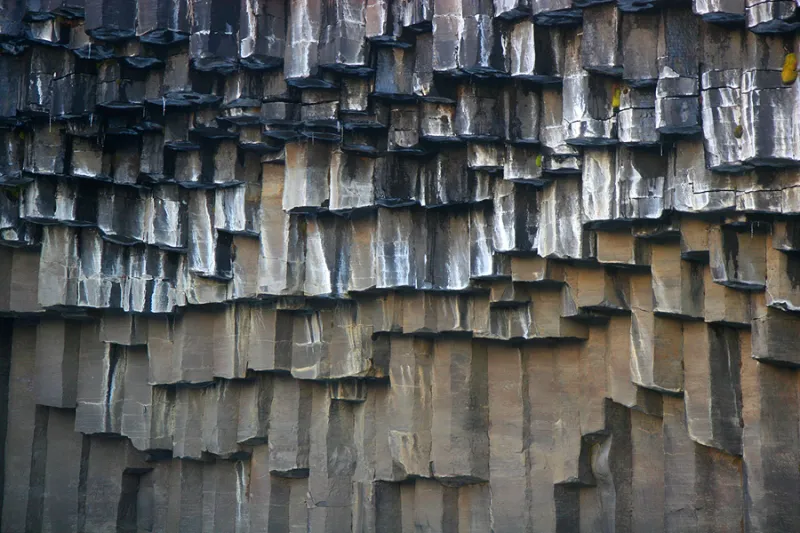
Photo: Debivort at en.wikipedia, CC BY-SA 3.0, via Wikimedia Commons
Most photographers arrive in Iceland with a shot list. Puffins at Látrabjarg. The black sand beach at Reynisfjara. Maybe a glacier tongue creeping out of Vatnajökull if the clouds cooperate. And honestly? Those are incredible images. But there's a version of Iceland photography that goes a layer deeper — literally — and it starts with understanding what you're actually looking at.
Iceland isn't just visually dramatic. It's geologically young, restless, and still mid-sentence in a story that started tens of millions of years ago. Once you tune into that, every landscape you frame shifts from a postcard moment into something with actual weight behind it.
Why Iceland Looks the Way It Does (The Short Version)
The island sits directly on the Mid-Atlantic Ridge, the underwater seam where the North American and Eurasian tectonic plates are slowly pulling apart. Iceland is essentially the only place on Earth where that ridge rises above sea level, which makes it one of the most geologically active spots on the planet.
That activity shows up everywhere. The geysers, the lava fields, the steaming vents — all of it is the Earth doing what it's been doing since long before humans were around to photograph it. What makes Iceland special for photographers isn't just the scale or the light (though both are extraordinary). It's the fact that you can stand in a landscape that's actively being made.
Basalt Columns: Nature's Grid That Rewards the Patient Shooter
If there's one geological formation that's become synonymous with Icelandic photography, it's columnar basalt. You'll find it at Reynisfjara, Svartifoss, Aldeyjarfoss, and dozens of less-famous spots scattered across the island.
Here's the science that changes how you shoot it: those hexagonal columns form when lava cools slowly and contracts. The cracking pattern — almost always six-sided — is the result of stress fractures spreading inward from the cooling surface. It's the same physics behind mud cracking in a dried-up lake bed, just at a vastly different scale and temperature.
Knowing that shifts your compositional instincts. The columns aren't just a texture — they're a record of a specific cooling event, frozen in time. When you photograph Svartifoss waterfall with its basalt curtain framing the cascade, you're not just shooting a waterfall. You're capturing the aftermath of a lava flow that happened roughly 700,000 years ago. Shooting wide to show the full column structure tells one story. Getting tight on the fracture lines where two columns meet tells another. Both are valid. Both are more intentional once you know what you're looking at.
Glacier-Carved Valleys: The Slow Violence of Ice
Þórsmörk — pronounced something like "Thors-verk" if you're American and don't want to butcher it — is one of Iceland's most rewarding and least-crowded destinations. Tucked between three glaciers, it has a chaotic, layered look that can feel overwhelming through a viewfinder.
Here's the frame that helps: everything you're seeing in a glacially carved valley is the result of ice doing something that takes centuries. Glaciers don't just sit there — they grind. They pluck rock from valley walls, carry debris for miles, and deposit it in ridges called moraines when they finally retreat. The U-shaped profile of a glacial valley (versus the V-shape of a river valley) is one of the most reliable visual signatures in geology.
For photography, that distinction matters. A U-shaped valley gives you natural leading lines along both walls, a flatter floor that often holds a river or lake, and dramatic height on either side. That geometry is a gift. It practically begs for a wide-angle shot with the valley floor as your anchor. Moraine ridges — those curved, lumpy hills that look almost random — work beautifully as mid-ground elements that add depth without competing with the peaks behind them.
Lava Fields and the Art of Shooting Emptiness
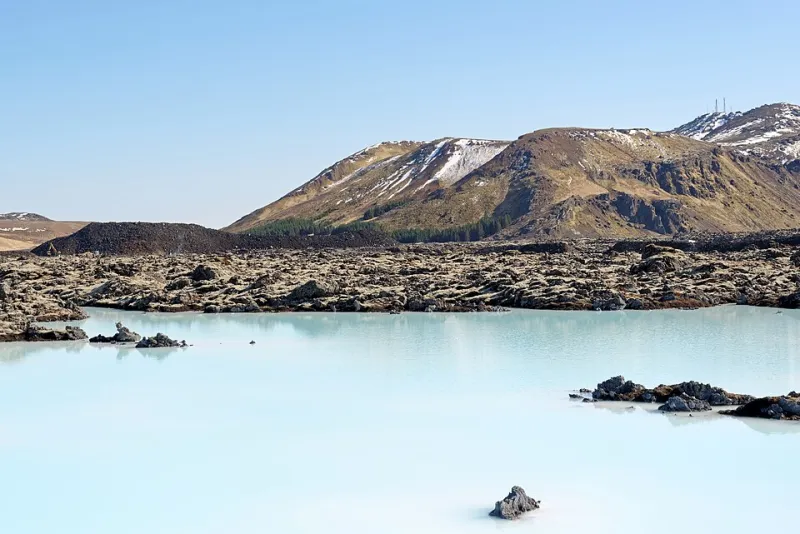
The Reykjanes Peninsula southwest of Reykjavík is mostly lava field. Miles of it. To a first-time visitor, it can feel like a lot of nothing. To a photographer who understands what they're looking at, it's endlessly complex.
Lava fields in Iceland come in two main flavors: pahoehoe (smooth, ropy, often iridescent when wet) and a'a (rough, jagged, the kind that shreds hiking boots). Both have completely different photographic personalities. Pahoehoe catches light in a way that makes it almost liquid-looking at golden hour — the smooth curves and reflective surfaces reward low-angle shooting and long exposures. A'a fields, by contrast, are textural nightmares in the best possible way. High contrast, harsh shadows, abstract patterns. They're made for black-and-white.
Some of the lava fields you'll walk across on Reykjanes are from eruptions that happened in the last few years. Others are centuries old, covered in a thin layer of pale green moss that's among the slowest-growing organisms on Earth. That moss is a visual clock — the more of it you see, the older the flow. Including it in your frame adds a timeline your viewer can intuitively feel, even if they can't explain why.
The Rhyolite Highlands: Color That Shouldn't Exist
Landmannalaugar in the central highlands is where Iceland breaks its own color rules. The rhyolite mountains here run through greens, pinks, purples, and oranges that look almost digitally manipulated in photographs — except they're not.
Rhyolite is a silica-rich volcanic rock that weathers into these extraordinary hues depending on its mineral composition and oxidation state. The reds and oranges come from iron oxide. The greens from minerals like epidote and chlorite. The pale yellows from sulfur deposits near geothermal vents.
Shooting Landmannalaugar challenges photographers to resist the urge to oversaturate. The colors are already doing the heavy lifting. The more compelling images from this area often use restraint — letting the palette breathe, anchoring the frame with a dark lava foreground or a hiker for scale, and avoiding the temptation to shoot everything at peak afternoon light when the colors flatten out. Early morning mist rolling between the ridges? That's when the rhyolite earns its keep.
What Geology Actually Gives You
Understanding Iceland's geology doesn't turn you into a scientist. It turns you into a more deliberate photographer. When you know that the crack running through a lava field marks where two lava tubes met and cooled at different rates, you start framing it as a boundary, not just a line. When you understand that the iceberg floating in Jökulsárlón glacial lagoon calved from a glacier that's been retreating for decades, you shoot it with a different kind of urgency.
The best travel photography doesn't just show what a place looks like. It shows what a place is. In Iceland, that means engaging with a landscape that's been building itself for millions of years and isn't done yet. Your camera is just the latest thing to witness it.