When the Sky Goes Gray, Iceland Gets Real: The Hidden Gift of Bad Weather Photography
You check the forecast the night before your big shoot. Rain. Fog. Maybe a little drizzle tapering into more drizzle. Your stomach drops. You've flown across the Atlantic, rented a campervan, and packed enough camera gear to fill a carry-on, and now the sky is going to look like a wet paper bag.
Here's the thing nobody tells you before you get on that plane: that wet paper bag sky might be the best thing that ever happened to your photographs.
Iceland has a way of rewiring your instincts. The conditions you'd cancel a shoot for back home — back in Denver, or Nashville, or wherever you're coming from — are the exact conditions that reveal Iceland's quieter, stranger, more honest self. And once you understand why, you'll never dread a gray forecast the same way again.
The Science Behind the Softness
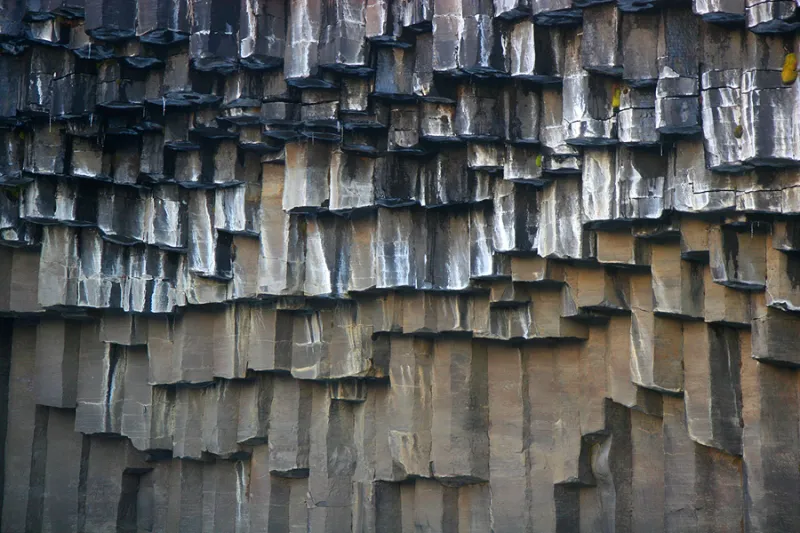
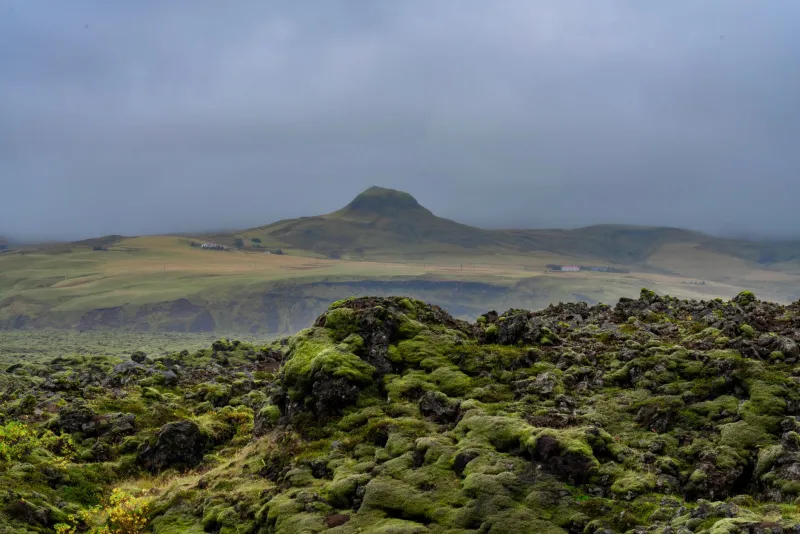
When the sun is blazing and the sky is a postcard blue, light hits your subject from one direction. Hard. That means sharp shadows, blown-out highlights, and a contrast range that even the best modern sensors struggle to handle gracefully. Beautiful conditions for a vacation snapshot? Sure. Ideal for capturing the texture of a basalt column, the layered moss on a lava field, or the subtle color gradation in a volcanic rock face? Not even close.
Overcast skies act like a giant softbox — the same tool that portrait photographers use in studios to eliminate harsh shadows and wrap their subject in even, flattering light. When clouds fill the sky above Iceland, they scatter sunlight in every direction simultaneously. The result is what photographers call diffused light: illumination that seems to come from everywhere and nowhere at once.
This kind of light is extraordinarily forgiving. Details that would disappear into shadow on a sunny afternoon suddenly become visible. Textures breathe. Colors — particularly Iceland's greens, blacks, and rust reds — saturate in a way that direct sunlight actually suppresses. The landscape stops performing and starts just... existing.
Fog Is Not the Enemy
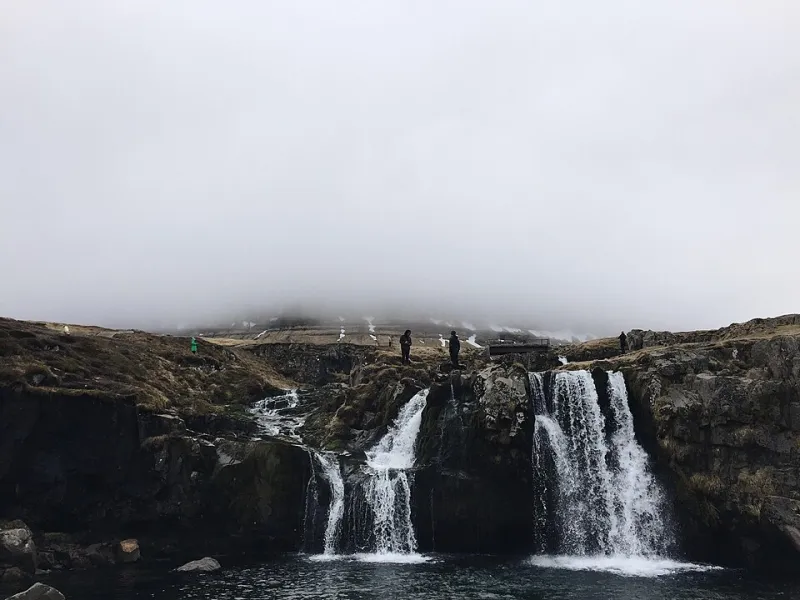
Fog deserves its own defense, because it's probably the condition most photographers reflexively dread. In Iceland, fog rolls in off the Atlantic with zero warning and can sit in a valley for hours. It obscures mountains. It makes waterfalls disappear. It turns your wide-angle composition into a gray wall.
But pull back and look at what it's doing to the foreground.
Fog creates atmosphere in the most literal sense. It adds visual depth by softening elements at different distances — foreground rocks stay sharp and detailed while midground features fade into mystery, and the background dissolves entirely. That layering is something you simply cannot manufacture in post-processing. It's a quality of light and air that cameras can capture but software can't fake.
Some of the most compelling landscape photographs from Iceland — the kind that stop you mid-scroll — were taken in conditions where visibility was under a mile. The fog wasn't hiding Iceland's beauty. It was editing it, stripping away the noise and leaving only the essential shapes.
Rain Changes Everything About Color
Wet surfaces are a photographer's best friend, and Iceland in the rain is essentially a country-sized reflective surface. The black sand beaches at Reynisfjara become almost mirror-like when wet, reflecting clouds and sky in ways that create natural abstract compositions. Moss — and Iceland has moss on absolutely everything — shifts from a muted olive to a vivid, almost electric green when it's soaked through.
Rain also cleans the air. The particulate matter and atmospheric haze that subtly degrade image sharpness on dry days gets washed out, and the resulting clarity in your RAW files is genuinely noticeable. Colors in the distance render more accurately. The horizon feels closer. Everything looks freshly pressed.
If you're shooting waterfalls — and in Iceland, you almost certainly will be — light rain is actually ideal. It keeps the spray from creating blown-out white patches in your long exposures, and the surrounding vegetation stays saturated and lush rather than dusty and dry.
Rethinking Your Shot List
The practical shift here is in how you approach your day when the weather turns. Instead of retreating to the campervan to wait it out, lean into what the conditions are offering.
Flat overcast days are perfect for detail and macro work. Iceland's geology is extraordinary up close — the crystal formations in volcanic rock, the patterns in dried lava flows, the way lichen colonizes stone in fractal-like clusters. These subjects need even light to reveal their complexity, and a gray sky delivers exactly that.
Fog-heavy mornings are ideal for coastal compositions where you want to isolate foreground elements. A single sea stack emerging from a white void is a more powerful image than the same stack against a busy, cluttered background. Let the fog do the compositional work for you.
Rainy afternoons are made for waterfalls and river valleys. Find a composition where the wet rocks and saturated vegetation frame your water feature, and shoot it. The richness of color you'll capture in those conditions is nearly impossible to replicate.
The Gear Reality Check
None of this works if you're not prepared to actually be in these conditions. A quality rain cover for your camera body is non-negotiable — not the flimsy plastic bag kind, but a proper fitted cover that lets you operate your controls without exposing the electronics. Most mirrorless systems have solid weather sealing these days, but no camera is fully waterproof without a housing.
A microfiber cloth in your jacket pocket is worth its weight in gold. Lens elements fog up, raindrops land on front elements, and you'll need to wipe down quickly and often. A lens hood helps reduce direct droplet contact.
For your own comfort: waterproof boots, layered base layers, and a windproof outer shell. Iceland's wind can make 45°F feel significantly colder, and a photographer who's too cold to think clearly is a photographer who's not making good creative decisions.
Changing the Mental Framework
There's a deeper shift that happens when you stop waiting for perfect conditions and start working with whatever shows up. You stop being passive — standing around hoping the clouds break — and start being active, looking for what the current light is actually revealing.
Iceland rewards that posture. The country is not a set of highlight locations that look good in ideal conditions. It's a living, constantly shifting environment where the light, weather, and landscape interact in ways that are genuinely unpredictable. The photographers who leave with the most compelling work aren't the ones who got lucky with the weather. They're the ones who showed up anyway, in the fog, in the rain, with a wet lens cloth and an open mind.
The gray days aren't the days between your good shooting days. More often than not, they are your good shooting days. You just have to be willing to see them that way.