Iceland After Dark: The Winter Season That Adventure Travelers Keep Getting Wrong
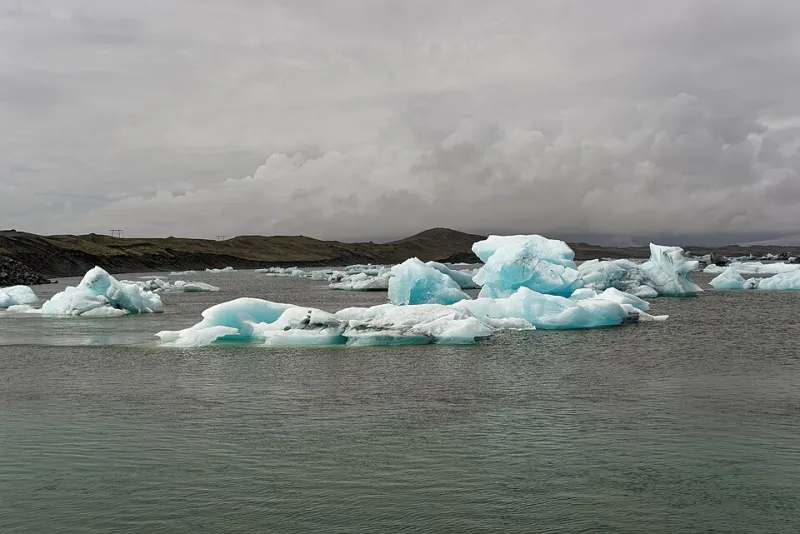
Photo: Jakub Hałun, CC BY 4.0, via Wikimedia Commons
Let's be honest about something. When most Americans start researching an Iceland trip, they gravitate toward the shoulder seasons — late spring, early fall — or they go full midnight sun in July. Winter gets a hesitant scroll and then a pass. Too dark. Too cold. Too much. The logic feels reasonable on the surface: why fly all that way to spend five hours in daylight?
Here's the thing, though. That reasoning is built on a version of Iceland that doesn't quite exist — or at least, it misses the Iceland that actually shows up between November and March. Winter there isn't an absence of experience. It's a different category of experience entirely, one that happens to filter out a significant chunk of the tourist traffic and leave behind something rawer, stranger, and frankly more memorable than a summer road trip along the Ring Road.
The Darkness Isn't a Bug
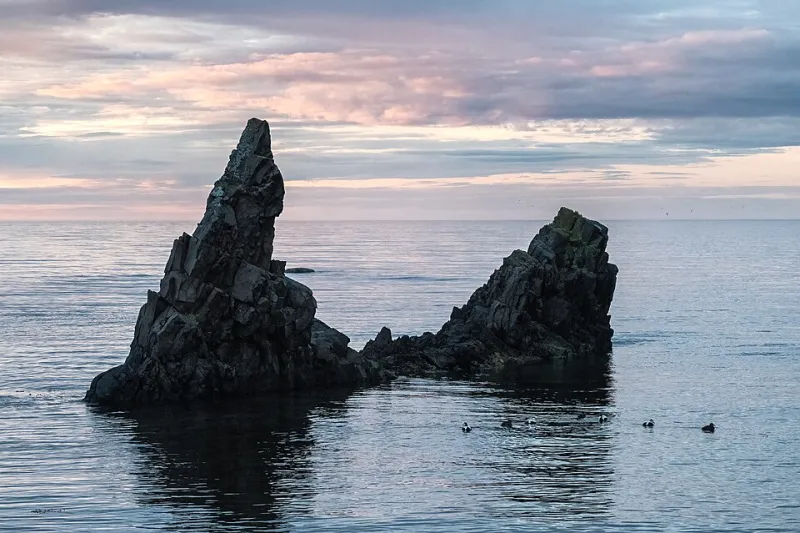
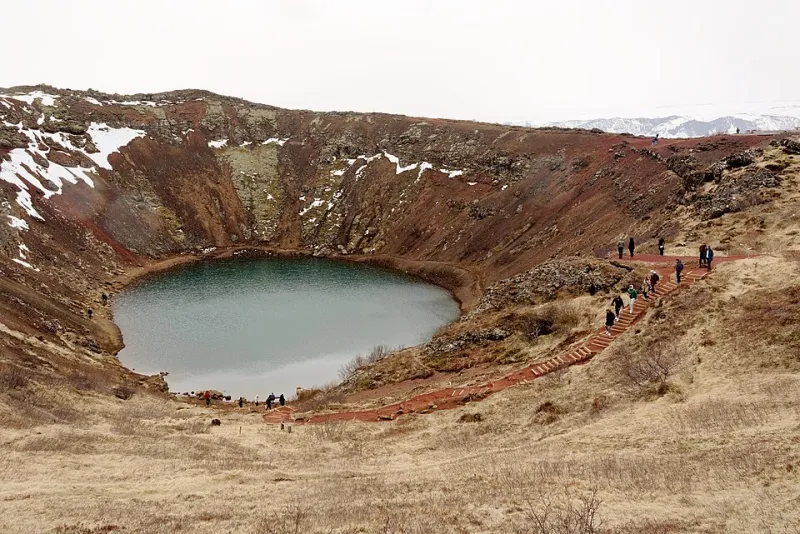
In Reykjavík in late December, you get around four hours of usable daylight. That sounds brutal until you reconsider what you're actually doing with the other twenty hours. In summer, Iceland's light is relentless — beautiful, yes, but it also flattens the drama out of certain landscapes and makes genuine rest feel weirdly elusive. Winter darkness gives the island its atmosphere back. The volcanic highlands look genuinely foreboding. Coastal cliffs feel enormous and ancient in a way that bright summer light softens. And the sky, when it clears, does things that no amount of planning can fully prepare you for.
The northern lights are the obvious example, but even that story gets told wrong. Most first-timers expect the aurora to look like the long-exposure photos they've seen online — those sweeping curtains of green and purple that seem to fill the entire frame. In real time, with your naked eye, a moderate display is subtler than that. It moves. It pulses. It shows up in places you weren't looking. And because you're experiencing it in actual darkness rather than the dim twilight that passes for night in Icelandic summer, the emotional weight of it lands differently. You feel genuinely small under it in a way that a camera image can't fully convey.
Ice Caves: The Experience That Doesn't Exist in Summer
If there's a single argument for winter Iceland that converts skeptics fastest, it's the glacier ice caves. These aren't permanent structures — they form each winter inside glaciers like Vatnajökull as meltwater carves tunnels through ancient ice, and they're only safely accessible from roughly November through March when temperatures drop enough to stabilize the ice. By May, they're gone or unsafe.
The colors inside a natural ice cave are genuinely hard to describe to someone who hasn't seen them. The ice is blue in a way that has no good comparison in everyday American life — not sky blue, not ocean blue, but something deeper and more compressed, like the color is under pressure. When a guide holds up a headlamp inside a chamber, the whole ceiling seems to absorb and redistribute the light. For photographers, these conditions are extraordinary: the contrast between artificial light sources and the ambient blue of the ice creates a layering effect that requires almost no post-processing to look dramatic.
Most ice cave tours operate out of the Jökulsárlón area in southeastern Iceland, a roughly five-hour drive from Reykjavík. The logistics require a certified glacier guide — this isn't a DIY situation — but the guided tours are well-organized and genuinely accessible to travelers without technical climbing experience.
Glacier Hiking in Winter: More Doable Than You Think
Here's a misconception worth dismantling: winter glacier hikes in Iceland aren't the extreme mountaineering expeditions they sound like to someone from, say, suburban Atlanta. Guided hikes on glaciers like Sólheimajökull operate year-round and are designed for regular travelers with no prior ice experience. You get crampons, an ice axe, and a guide who's done this a few hundred times. The hike itself is physically demanding but not technical.
What changes in winter is the visual environment. The glacier sits under a low, steel-colored sky. The surrounding black sand and ash fields are often dusted with snow, creating a high-contrast monochrome landscape that photographers will immediately recognize as exceptional. Meltwater streams that carve through the ice in summer are frozen in place, creating sculptural formations that look almost architectural. The whole scene has a stillness to it that summer's tourist traffic tends to disrupt.
The Photography Case for Winter
Summer Iceland photography is about abundance — light everywhere, waterfalls at full volume, green highlands, puffins on the cliffs. Winter photography is about edge. The light that exists in those four or five usable hours is consistently extraordinary: low-angle, directional, warm-toned in a way that summer's overhead sun rarely achieves. The famous black sand beaches at Reynisfjara look completely different in January — the basalt columns darker with moisture, the waves larger and more violent, the sky doing something dramatic almost every hour.
Frosted lupine fields, ice-rimmed waterfalls at Skógafoss and Seljalandsfoss, the crystalline clarity of Jökulsárlón's iceberg lagoon in subfreezing temperatures — these are genuinely different photographs than their summer equivalents. Not better or worse, but different in a way that makes a winter portfolio feel like it was shot on another planet.
A Few Honest Caveats
None of this is to pretend winter Iceland is without real challenges. Road conditions require genuine attention — the Icelandic Road Administration's website (road.is) is not optional reading, it's mandatory. A 4WD vehicle with winter tires is the baseline, not an upgrade. Weather can cancel or delay plans with very little notice, which means building flexibility into your itinerary matters more in winter than any other season.
Dress in proper layers — this means wool base layers, not cotton — and don't underestimate wind chill on coastal locations. The cold itself is manageable; it's the wind off the North Atlantic that catches people unprepared.
But here's the honest bottom line: the travelers who come to Iceland in winter and do the work to prepare for it tend to leave with the most singular stories. They saw the aurora. They crawled into a glacier. They had a black sand beach entirely to themselves at 3 p.m. on a Tuesday. They got the version of Iceland that most people only see in photographs — and they got it because they stopped being afraid of the dark.