Forget the Brochure: How Iceland's 'Imperfect' Conditions Create Your Most Honest Photos
You've seen the photo. Perfectly still glacial water reflecting a violet-pink sky. Not a single other person in frame. The ice looks almost luminescent, like someone lit it from beneath. You saved it to your phone months ago, maybe even printed it out and pinned it above your desk.
Then you show up to Jökulsárlón glacier lagoon at 9 a.m. on a Tuesday in July, and there are forty-seven people standing exactly where that photographer stood. The sky is a flat, uninspiring gray. The wind is kicking up small whitecaps on the water. And somewhere behind you, a tour bus is idling.
This is the Iceland photography paradox — and it's one of the most valuable things that can happen to you as a visual storyteller.
The Viral Version of Iceland Isn't a Lie, Exactly
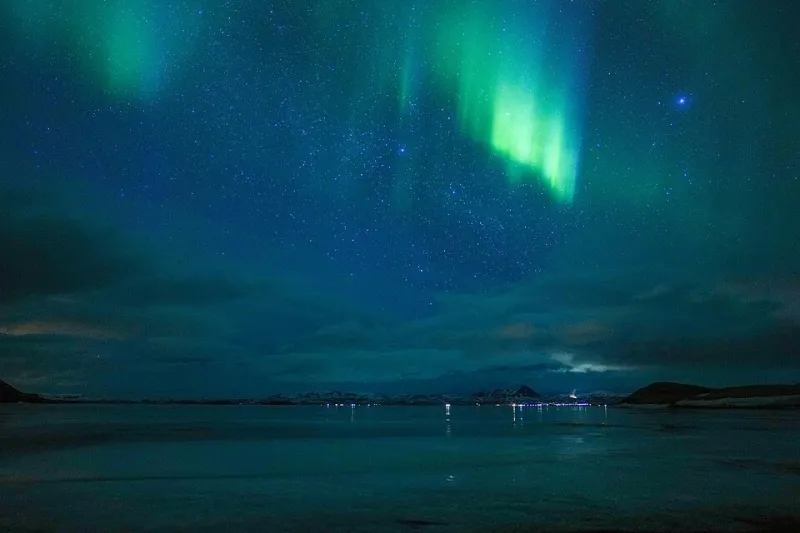
Let's be fair to the brochures. Those stunning images aren't fabricated. Iceland genuinely does produce skies that glow purple and pink. The glaciers actually are that shade of blue. The waterfalls do catch light in ways that feel almost supernatural. The photographers who captured those shots weren't making things up — they were just incredibly lucky, incredibly patient, or both.
But here's what the viral version doesn't tell you: those conditions might occur for twenty minutes every few weeks. The rest of the time, Iceland is doing something else entirely — something rawer, more unpredictable, and honestly more interesting once you learn to work with it instead of against it.
Heavy processing also plays a role. Saturation cranked up, shadows lifted, highlights pulled down, skies replaced in some cases. That's not a crime — photo editing is part of the craft — but it creates an expectation gap that can genuinely derail your creative mindset if you're not prepared for it.
Overcast Skies Are a Soft Box, Not a Failure
Ask any portrait photographer what kind of light they'd choose for a shoot, and most will say overcast. Diffused, even, no harsh shadows. Iceland's frequent cloud cover works exactly the same way on landscapes.
When the sky is a flat gray ceiling, the light falls evenly across everything. Mossy lava fields go from looking washed out to intensely saturated — that particular shade of electric green that Iceland is known for practically pops without any editing. Black sand beaches at Reynisfjara lose the blown-out highlights you'd get in direct sun. The textures in basalt columns become readable in a way they simply aren't when half the rock is in shadow.
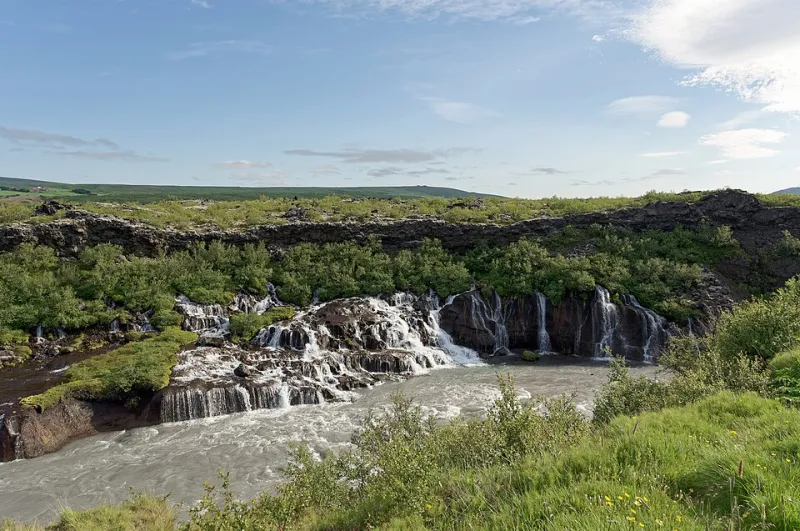
Overcast conditions also make waterfalls significantly easier to shoot. Long exposures that would normally blow out the white water become much more manageable when you're not fighting direct sunlight. Skógafoss and Seljalandsfoss — both magnets for photographers — are actually easier to work with under cloud cover than on a sunny afternoon.
The mental shift is simple but not easy: stop looking up at the sky hoping it'll change, and start looking at what the current light is doing to the things you actually want to photograph.
Crowded Viewpoints Are a Constraint, Not a Dead End
You will not be alone at Kirkjufell. You will not have Seljalandsfoss to yourself. During summer months especially, Iceland's most famous spots draw enormous crowds, and the fantasy of a solitary photographer in a dramatic landscape is mostly just that — a fantasy.
But constraints breed creativity. When you can't get the wide establishing shot without twenty other people in it, you start looking for something different. The detail shot. The reflection in a tide pool. The way the mist from the waterfall is catching on someone's jacket. The texture of the rock face itself.
Some of the most compelling Iceland photography actually includes people — not as obstacles, but as scale, as context, as proof that this place is real and that humans are genuinely small against it. A lone figure standing at the edge of a glacier conveys something that a technically pristine landscape shot sometimes doesn't: the feeling of actually being there.
Harsh Midday Light Forces You to Find the Shot That Isn't Obvious
Iceland's summer sun doesn't set — it just arcs low across the sky for what feels like an entire day. That extended golden hour is genuinely spectacular, but it's also only part of the story. Midday light in Iceland can be harsh, flat, and unflattering in all the ways photographers are taught to avoid.
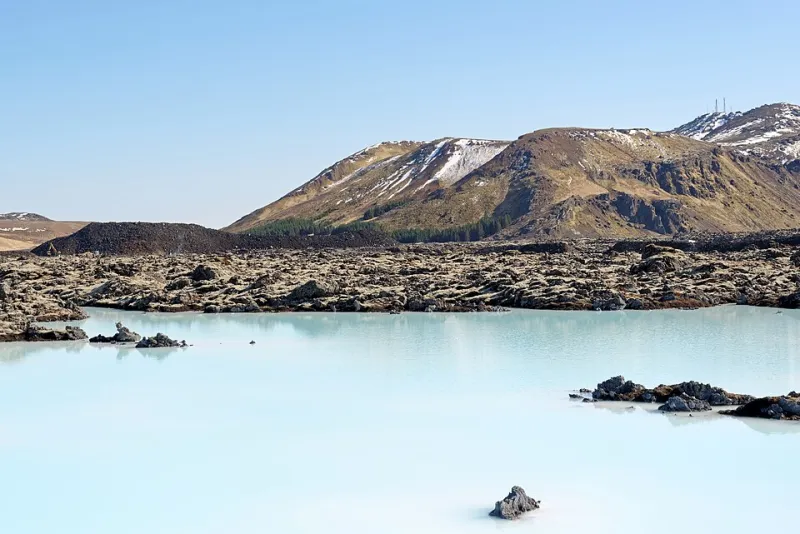
So what do you do with it? You look for shots that don't depend on dramatic light. Abstract textures in geothermal mud fields. Macro work on wildflowers and lichen. Interior shots inside turf houses or fishing villages. The inside of a cave behind a waterfall, where the ambient light filtering through creates something soft and otherworldly regardless of what the sun is doing outside.
Midday is also a good time to scout. Walk the locations you want to shoot at golden hour. Figure out your angles, your compositions, your focal lengths. When the light does turn, you won't be scrambling — you'll already know exactly where to stand.
Weather as a Collaborator, Not an Adversary
Iceland's weather is famously volatile. Four seasons in a single afternoon is a cliché that happens to be accurate. Rain can move in from the coast in minutes. A clear morning can become a whiteout by noon. Fog rolls across the highlands like something out of a film set.
None of this is bad for photography. All of it is interesting.
The moment a rain shower moves through and the sun catches the spray, you get a rainbow over a black sand beach that no amount of post-processing could manufacture. Fog settling into a valley creates depth and atmosphere that a clear day simply can't replicate. A storm rolling in over the Snæfellsnes Peninsula turns an ordinary coastal shot into something genuinely dramatic.
The key is staying ready. Keep your camera accessible. Don't pack it away when the weather turns — that's often exactly when the light gets strange and beautiful. A waterproof camera bag and a rain cover for your lens aren't optional accessories in Iceland; they're basic equipment.
The Photo That Tells the Truth
The images that stick with people — the ones that actually make them want to go somewhere — aren't always the technically perfect ones. They're the ones that feel real. That communicate something about the experience of being in a place, not just the appearance of it.
Iceland is dramatic, yes. But it's also moody, unpredictable, sometimes frustrating, and frequently surprising. The brochure version captures one narrow slice of that. Your version — shot in whatever conditions you actually encounter — has the potential to capture something more honest, and more lasting.
That's not a consolation prize. That's the whole point.