Off the Beaten Path: Iceland's Secret Waterfalls That Serious Photographers Seek Out
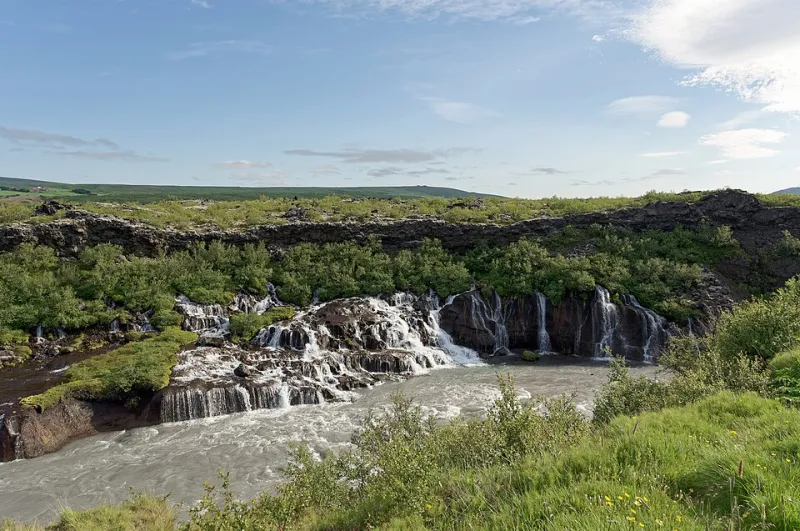
Photo: Jakub Hałun, CC BY 4.0, via Wikimedia Commons
Let's be honest. If you've scrolled through Iceland travel photography for more than five minutes, you've seen Skógafoss. You've seen it at golden hour with a lone figure standing at the base. You've seen it in black and white. You've seen it with a rainbow cutting through the mist. It's a genuinely spectacular waterfall — nobody's disputing that — but it's also become a visual shorthand so overused that it barely registers anymore.
That's exactly why a growing number of travel photographers are packing their gear and heading somewhere else entirely.
The Problem With Famous
Popularity is a funny thing in photography. The more stunning a location, the more it gets photographed. The more it gets photographed, the more it shows up in feeds and travel guides. And the more it shows up in those places, the harder it becomes to make an image that feels like yours.
Photographer Dana Lowe, who has made four separate trips to Iceland from her home base in Portland, Oregon, describes the shift in her thinking pretty bluntly. "My first trip, I hit every spot on the highlight reel. I came home with technically fine photos that looked exactly like everyone else's. My second trip, I started asking: what if I just drove past those places and kept going?"
What she found when she kept going were waterfalls with no parking lots. Cascades tucked into highland valleys that required a bit of hiking, some patience with a paper map, and the willingness to get genuinely muddy. And photographs that, for the first time, felt like hers.
Where the Quiet Ones Are Hiding
Iceland is lousy with waterfalls — there are estimated to be thousands of them across the island. The famous ones cluster along the Ring Road and the south coast, which is exactly why the alternatives require a little more effort to reach.
The Westfjords region is probably the most dramatic example. Dynjandi, sometimes called the "Jewel of the Westfjords," draws far fewer visitors than its southern counterparts despite being genuinely jaw-dropping — a tiered cascade that fans out like a bridal veil over a 330-foot drop. Getting there means committing to a longer drive on gravel roads, which is precisely the filter that keeps the crowds thin.
The highlands — accessible only during summer months when the F-roads open — hide entire river systems that most tourists never see. Waterfalls here don't have names on Google Maps. They don't have Instagram location tags. They have moss-covered lava fields, the sound of wind, and occasionally, a wandering sheep.
Even within the south coast corridor, there are lesser-known options. Gljúfrabúi, a waterfall literally hidden inside a canyon near Seljalandsfoss, is technically steps away from the tourist trail but requires wading through a shallow stream to enter a narrow gorge. Most visitors don't bother. Photographers absolutely should.
Shooting Moving Water: The Technical Stuff That Actually Matters
Once you've found your waterfall and you've got the place to yourself, the real work begins. Water in motion is one of the trickier subjects in landscape photography, and Iceland's overcast skies — which frustrated photographers often curse — are actually your best friend here.
Diffused light means no harsh shadows cutting across your scene. It means you can shoot at any point during the day without fighting contrast. And it means the colors in the surrounding moss and lichen — Iceland's extraordinary greens and golds — render with a richness that direct sunlight tends to bleach out.
For shutter speed, the classic choice is a long exposure: anywhere from half a second to several seconds, depending on the volume and speed of the water. This is what creates that silky, flowing effect you've seen. But don't stop there. Fast shutter speeds — 1/500th or quicker — freeze individual droplets and reveal textures in the water that long exposures erase entirely. Try both. The frozen version often feels more visceral, more immediate, especially with powerful falls.
A circular polarizer is non-negotiable. It cuts the glare off wet rocks, deepens the saturation in surrounding vegetation, and generally makes everything look more like what your eyes actually see. A sturdy tripod matters too — Iceland's wind does not care about your composition plans.
The Solitude Factor
Here's something that doesn't get talked about enough in travel photography circles: the experience of making a photograph matters as much as the photograph itself. And making an image while standing elbow-to-elbow with forty other people, all with their phones out, is a fundamentally different experience than standing alone in a valley with water thundering down in front of you and nothing but open sky above.
Photographer Marcus Chen, who leads photography workshops out of Seattle and runs annual Iceland trips for his students, puts it this way: "I stopped bringing groups to Seljalandsfoss years ago. Not because it's not beautiful — it is — but because my students can't hear themselves think. They can't slow down. They're reacting to the crowd as much as the landscape. When we find somewhere quiet, something shifts. They start actually looking."
That shift — from reactive to deliberate — is where the interesting photographs come from.
A Different Kind of Iceland Trip
Building an itinerary around lesser-known waterfalls does require a different mindset than following a standard tourist route. You'll need a capable vehicle (4WD is strongly recommended for any serious off-road scouting), solid navigation tools, and a flexible schedule. Iceland's weather has opinions, and those opinions change fast.
But the payoff is an Iceland that most visitors never experience — quieter, wilder, and frankly more photogenic precisely because it hasn't been photographed to death yet. The famous falls will still be there. They'll still be stunning. And if you want to stop and shoot them anyway, nobody's judging.
Just maybe keep driving a little further first.