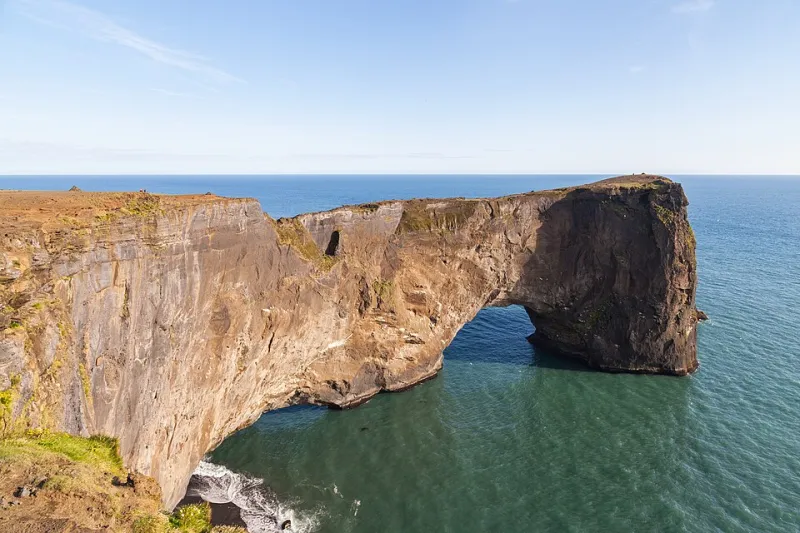
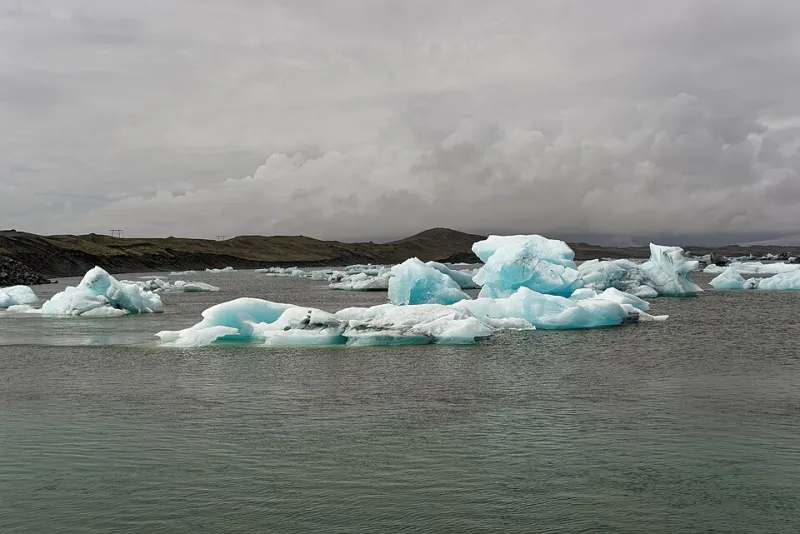
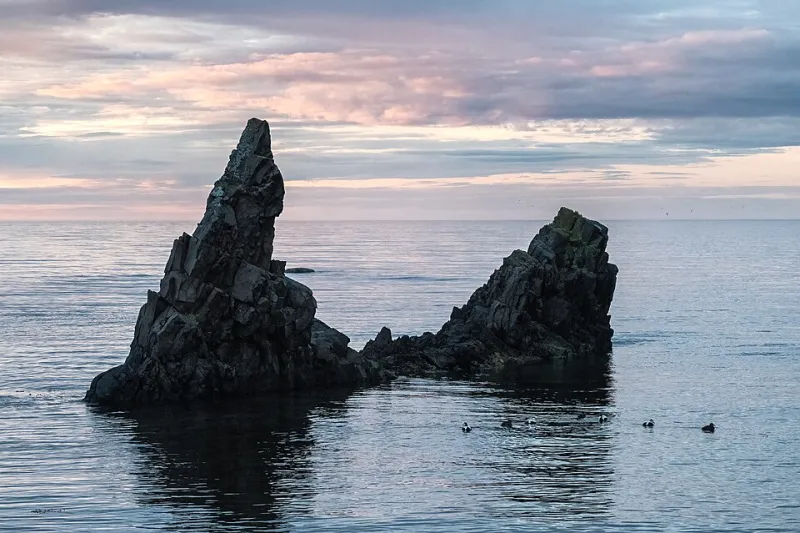
May and September in Iceland: The Shoulder Seasons That Serious Photographers Are Quietly Claiming
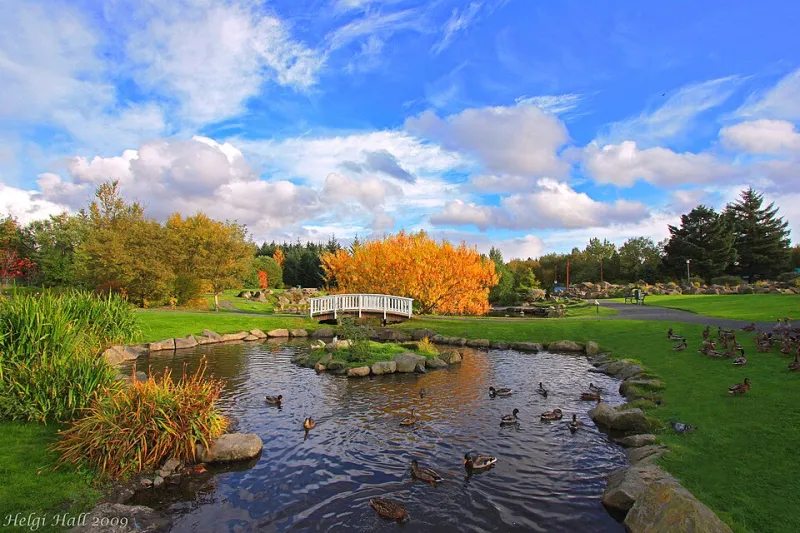
Photo: Helgi Halldórsson from Reykjavík, Iceland, CC BY-SA 2.0, via Wikimedia Commons
Ask most Americans when to visit Iceland and you'll get one of two answers: summer, for the midnight sun and the green landscapes; or winter, for the aurora borealis and the snow-draped drama. It's a reasonable framework. Both seasons deliver genuinely spectacular conditions, and the photography that comes out of them is well-documented across every travel platform you can think of.
But there's a quieter conversation happening among photographers who've been to Iceland more than once — the ones who've already shot Seljalandsfoss at 2 a.m. in June and Jökulsárlón under a curtain of northern lights in January. They're increasingly booking flights for May and September. And they're not rushing to tell everyone about it.
What Makes a Shoulder Season Worth Your Time
The conventional travel logic around shoulder seasons usually focuses on cost and crowds — and yes, both of those factors apply in Iceland. Flights are cheaper, accommodations have more availability, and the tour buses that clog the Ring Road in July are largely absent. If those were the only advantages, this would be a pretty standard travel tip.
But for photographers specifically, May and September offer something that summer and winter actually can't: transition. The light is changing. The weather is genuinely unpredictable in ways that generate visual drama rather than simply bad conditions. The landscape itself is in the middle of becoming something else, and that in-between state is frequently more compelling than either endpoint.
May: Spring That Doesn't Quite Behave Like Spring
May in Iceland doesn't look like May in, say, the Pacific Northwest or the mid-Atlantic states. The transformation from winter to summer happens on Iceland's own schedule, which means you can encounter snow on the highlands, wildflowers in the lowlands, and ice still lingering on some glacial lakes — sometimes all within the same afternoon.
The light in May is extraordinary. The midnight sun hasn't fully arrived yet, but the days are getting very long, and the sun spends hours near the horizon during what would normally be evening. That extended low-angle light — often called the "blue hour" but stretching well beyond an hour — wraps across the landscape in a way that's genuinely different from the full midnight sun of June and July. It's softer. More directional. And it comes with a quality of warmth that plays off Iceland's emerging green in ways that feel almost impossibly cinematic.
Lupine fields are beginning to bloom in May, particularly in the south. These purple wildflowers — technically an invasive species, but visually stunning — carpet roadside meadows and hillsides in a way that creates foreground interest for landscape shots that's simply unavailable in winter.
Wildlife is also more active. Arctic terns are returning from their extraordinary migrations. Puffins are beginning to appear along the Westfjords and on the Snæfellsnes Peninsula. Lambs are appearing in the fields — which sounds pastoral and minor until you've tried to photograph a newborn Icelandic lamb against a snow-capped mountain backdrop and realized you've got an image that absolutely no winter photographer is capturing.
September: The Month the Light Gets Strange
If May is Iceland waking up, September is Iceland starting to dream again. The midnight sun is gone, but polar night hasn't arrived. What you get instead is a day length that's dropping fast — roughly fifteen hours at the start of the month, down to around twelve by the end — with the sun tracking lower and lower across the sky as the weeks pass.
That dropping sun angle means golden hour is getting longer again. And unlike the relentless brightness of July, September's light has a quality that photographers often describe as melancholy or cinematic — longer shadows, deeper contrast, a warmth that feels borrowed rather than abundant.
September is also when the northern lights return. Aurora activity picks up significantly as Iceland tilts away from the midnight sun and the nights get dark enough to actually see the sky. You won't have the guaranteed darkness of January, but you'll have something arguably more interesting: nights dark enough for aurora hunting combined with days long enough for full landscape photography. It's the only month where you can realistically plan for both in the same trip without compromise.
The weather in September is genuinely dramatic in ways that produce great photographs. Storm systems move through regularly, and the collision of summer's residual warmth and approaching winter cold creates cloud formations that are frankly unusual. Lenticular clouds over the glaciers. Massive cumulonimbus stacks building over the highlands. Fog burning off coastal cliffs in the morning. These aren't conditions you can predict or plan around — but they're conditions that reward photographers who are patient, prepared, and willing to stay flexible.
The Crowd Factor Is Real and It Matters
Let's be direct about this: Iceland's most famous locations are genuinely difficult to photograph in peak summer. Kirkjufell, the diamond beach at Jökulsárlón, the canyon at Fjaðrárgljúfur — all of them attract enormous numbers of visitors from late June through August. Getting a clean composition without other tourists in frame requires either waking up at 3 a.m. (which is admittedly easier when the sun is already up) or accepting that people are part of your shot.
In May and September, that pressure eases significantly. You can set up a tripod at Reynisfjara without someone walking into your frame every forty-five seconds. You can take your time at Skógafoss without feeling like you're blocking traffic. The practical reality of having space to work — to try different angles, to wait for the light to shift, to make mistakes and try again — makes a meaningful difference in the quality of work you produce.
Packing and Preparation: What Changes in the Shoulder Seasons
Shoulder season Iceland requires a broader gear range than either peak season. In May, you might encounter winter conditions in the highlands and spring conditions at lower elevations on the same day. In September, temperatures can swing dramatically between a mild afternoon and a cold, windy evening.
Layering is non-negotiable. Waterproofs are essential. And because the weather is more variable than either summer or winter, you'll want to keep your camera accessible more consistently — the conditions that produce great images often arrive without much warning and don't stick around for long.
Highland roads (the F-roads) may still be closed or just opening in May, which limits access to the interior. By September, many are open but beginning to close again toward the end of the month. Check road conditions at road.is before any highland excursion — this isn't optional advice.
A Different Kind of Iceland Trip
Shoulder season travel in Iceland isn't about settling for less than summer or winter. It's about choosing something different — a version of Iceland that's less curated, more changeable, and in many ways more honest about what the country actually is: a place in constant flux, where the landscape and the light and the weather are always in the middle of becoming something else.
For photographers, that state of becoming is often where the most interesting work lives. The transition shots. The in-between light. The landscape caught mid-transformation between green and white, between long days and long nights.
May and September won't give you the midnight sun at its peak or the northern lights at their most reliable. What they'll give you is Iceland with its guard down — and that might be the most compelling subject of all.