Iceland Looks Nothing Like That Photo — And That's Actually Okay
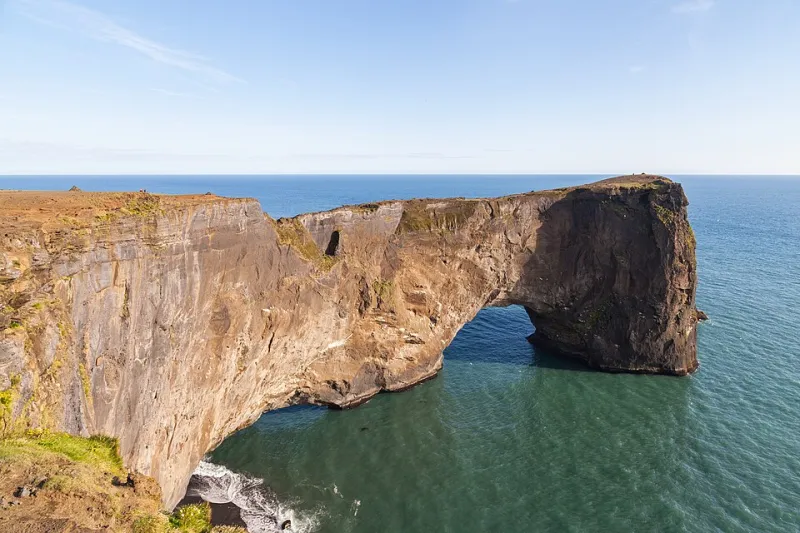
Photo: Diego Delso, CC BY-SA 4.0, via Wikimedia Commons
Somewhere between your Instagram feed and the arrival terminal at Keflavík Airport, expectations get complicated.
You've spent months looking at Iceland photography. You've saved the posts, the reels, the Pinterest boards. You know what the black sand beach at Reynisfjara is supposed to look like — all brooding drama and crashing Atlantic waves under a sky that seems to exist in a different color spectrum than the rest of Earth. You know what the aurora is supposed to look like: vivid green curtains rippling across a perfect reflection in a glassy lake.
And then you get there. And it's... not quite that.
The beach is still stunning. The aurora, if you're lucky enough to catch it, is still one of the most remarkable things you'll ever witness. But the colors are softer. The sky is more complicated. The whole thing feels less like a screensaver and more like a real place — which, of course, it is.
The Processing Problem
Let's start with the most straightforward part of this conversation: the vast majority of Iceland photography you see online has been significantly post-processed. That's not a criticism — it's just a fact about how modern photography works.
Raw image files from digital cameras are deliberately flat and neutral, designed to capture maximum data for editing rather than to look finished straight out of the camera. Every professional photographer processes their images. The question is how much, and toward what end.
In Iceland travel photography specifically, certain editing choices have become almost universal. Teal shadows. Boosted highlights in the sky. Green saturation cranked up to make the moss pop. These aren't arbitrary decisions — they're responding to something real in the landscape, genuinely amplifying colors and contrasts that exist there. But they're also creating a version of Iceland that's turned up louder than the original.
Sigríður Magnúsdóttir, a Reykjavík-based photographer who has been shooting Iceland's landscapes professionally for over a decade, is thoughtful about this. "The processing isn't lying, exactly. Iceland really does have extraordinary light. The moss really is that green sometimes. But 'sometimes' is doing a lot of work in that sentence. What people see online is the best conditions, the best light, the best processing — all stacked together. They're not seeing the fifty other days when it was gray and beautiful in a completely different way."
What Iceland Actually Looks Like
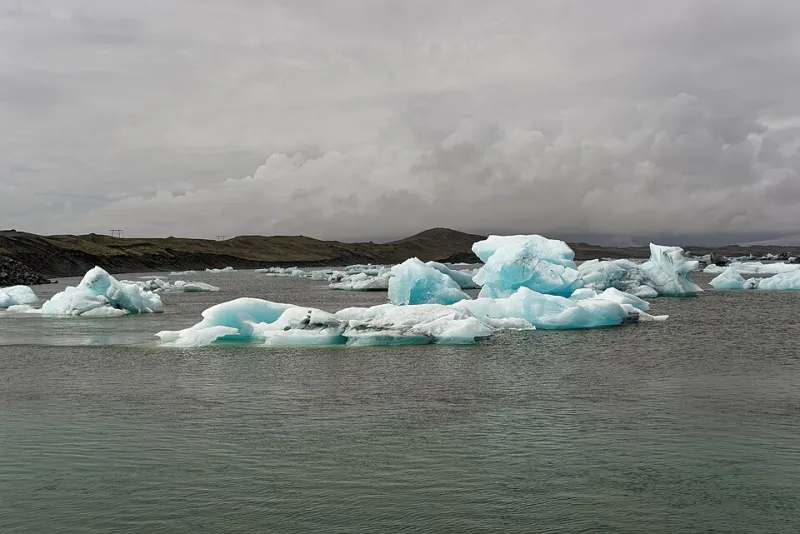
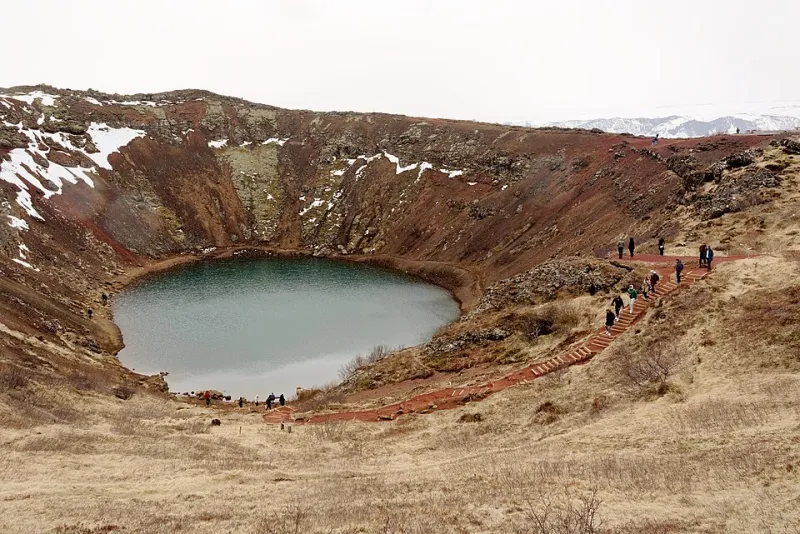
Here's the thing nobody puts in the caption: Iceland is predominantly gray, green, and brown. The sky is frequently overcast. The light is often diffused and flat. The volcanic landscapes — which are genuinely otherworldly — are mostly dark basalt and pale pumice, not the vivid reds and oranges that pop up in heavily edited images.
And all of that is spectacular. Genuinely, deeply spectacular — just in a quieter register than the photography suggests.
The Icelandic interior in summer is one of the strangest and most beautiful environments on Earth: vast, treeless, almost lunar, with rivers braiding through gravel plains and steam rising from vents in the hillsides. But photographs of it tend to look either extremely dramatic (heavily processed, golden hour, dramatic clouds) or extremely dull (flat midday light, no processing). The actual experience of being there — the scale, the silence, the smell of sulfur, the way the wind moves — doesn't translate to a still image at all.
This is a real limitation of photography as a medium, not a failure of individual photographers. Some places are just better in person.
The Viral Image Trap
Social media has created a specific feedback loop that's worth naming directly. A photographer makes a striking, heavily processed image of a location. It goes viral. Thousands of people save it and add the location to their travel lists. They arrive, shoot the same location, and process their images to match the aesthetic they've seen — because that's the template they're working from. Those images get shared. The cycle continues.
The result is an enormous body of photography that's technically accomplished, visually consistent, and increasingly disconnected from the actual experience of being in Iceland.
Travel photographer James Okafor, who runs photography workshops across Scandinavia and Iceland for American and Canadian participants, sees this play out constantly. "People show up with a folder of reference images on their phone. They want to recreate specific shots. And I get it — that's how most of us learned, by studying images we admired. But at some point you have to put the reference folder away and just look at what's actually in front of you."
What's actually in front of you, he argues, is almost always more interesting than the photograph you came to recreate. It's just harder to see, because you haven't been trained to look for it.
Developing Your Own Visual Language
This is the part of the conversation that's easier said than done — but it's also the part that matters most.
Every photographer you admire has a visual language that developed over time through trial, error, and a lot of looking at their own work honestly. That language involves choices about color, contrast, subject matter, and framing that are specific to them. It's what makes their photographs recognizable, and it didn't come from copying someone else's presets.
In practical terms, developing your own approach to Iceland photography means a few things. It means shooting in conditions that don't match the reference images — the gray days, the rain, the flat light — and figuring out what's interesting about those conditions rather than waiting for them to change. It means processing your images toward what you actually felt in the moment rather than toward what you've seen other people do. And it means being willing to make photographs that won't necessarily perform well on social media because they're quieter, stranger, or more personal than the viral template.
Sigríður puts it plainly: "The photographers whose work I find most interesting are the ones who show me something I haven't seen before. Iceland is so over-photographed that showing me something new is actually very hard. But it's possible. It just requires not looking at what everyone else is doing."
A More Honest Expectation
None of this means you should skip Iceland because the reality won't match the Instagram version. The reality is extraordinary — it's just extraordinary in ways that are harder to photograph than they are to experience.
Go for the volcanic silence and the midnight sun and the way the light moves across a lava field in a way you've never seen anywhere else. Go for the thermal pools and the glacial rivers and the sheer improbability of the whole place. Bring your camera. Make photographs.
Just maybe leave the reference folder at home.