Iceland's Golden Hours That Never End: What Happens When the Sun Refuses to Set
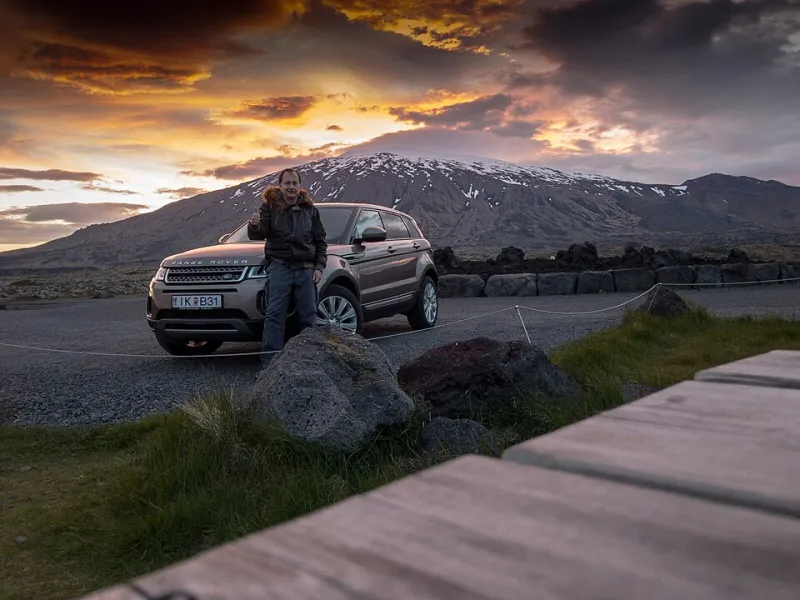
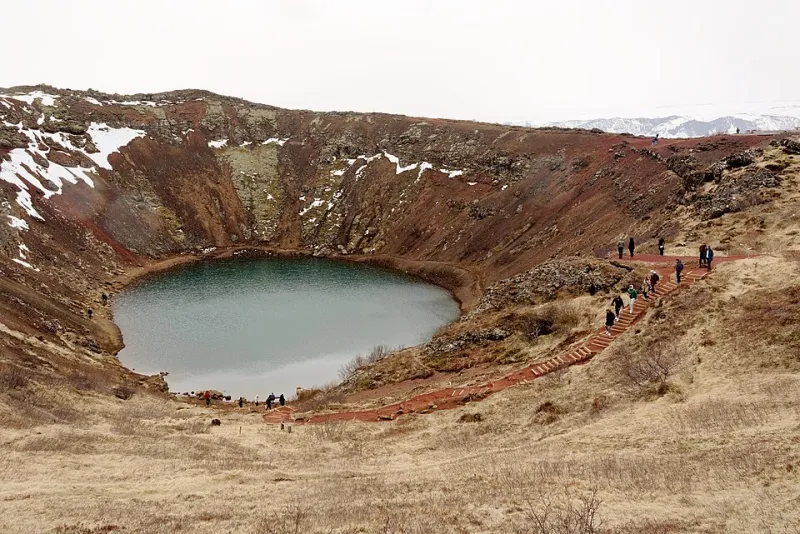
Photo: salomon10, CC BY 2.0, via Wikimedia Commons
Imagine packing up your camera gear at 11:30 PM, stepping outside your guesthouse in Reykjavik, and being greeted by the warm amber glow of what looks unmistakably like a late-afternoon sky. No stars. No darkness. Just a sun lazily draped along the horizon, painting the landscape in colors that most photographers only dream about chasing for a few fleeting minutes each day.
Welcome to Iceland's midnight sun — one of the most disorienting, awe-inspiring, and creatively explosive natural phenomena on the planet.
The Astronomy Behind the Magic
So why does Iceland get so much daylight in summer? It all comes down to axial tilt. Earth leans at roughly 23.5 degrees on its axis, and as our planet orbits the sun, that tilt means different hemispheres receive dramatically different amounts of sunlight depending on the time of year.
Iceland sits just below the Arctic Circle — the southernmost latitude where the sun technically never sets during the summer solstice. Reykjavik, at about 64 degrees north, doesn't quite hit the "midnight sun" threshold of full 24-hour daylight, but it comes remarkably close. Around the summer solstice in late June, the capital city sees roughly 21 to 22 hours of usable daylight, with the sun dipping just barely below the horizon before rising again within a couple of hours.
Head further north — to Akureyri or the Westfjords — and you'll experience the real deal: a sun that genuinely doesn't set at all between late May and late July.
For US travelers used to long summer days in places like Alaska or the Pacific Northwest, Iceland still manages to feel like a completely different planet. The quality of the light here isn't just about quantity — it's about angle. Because the sun stays low on the horizon for hours at a time rather than soaring overhead, the light is perpetually soft, directional, and saturated with that golden warmth photographers spend their careers chasing.
Golden Hour? Try Golden Night.
Ask any landscape photographer what their favorite time of day to shoot is, and they'll almost universally say golden hour — that magical window just after sunrise or just before sunset when light skims the earth at a low angle and everything it touches looks like it's been lit by a Hollywood gaffer.
In Iceland during summer, that window doesn't close.
Jennifer Hartwell, a travel photographer from Portland, Oregon, described her first experience with the midnight sun like this: "I set an alarm for 2 AM because I'd read you could catch incredible light then. I woke up, looked out the window, and genuinely thought I'd slept through the night and it was already morning. I never went back to sleep. I just grabbed my camera and walked out into this insane orange light reflecting off Jökulsárlón glacier lagoon and stood there for two hours with my jaw on the ground."
Jennifer's experience is common. The midnight sun doesn't just extend shooting time — it fundamentally changes your creative rhythm. There's no race against the clock. No desperate sprint to a viewpoint before the light dies. Instead, photographers find themselves in a sustained state of creative flow that can stretch across what would normally be an entire night.
Practical Tips for Photographing Iceland's Endless Light
Shooting in near-24-hour daylight comes with its own set of challenges, and US visitors often arrive underprepared. Here's how to make the most of it:
Ditch the schedule. Your body's internal clock will fight you on this, but the most spectacular light often happens between midnight and 3 AM when tourist crowds vanish and the sun dips lowest. Give yourself permission to flip your schedule entirely.
Bring a sleep mask. This sounds obvious, but countless travelers underestimate just how bright Icelandic guesthouses can get at "night." Blackout curtains aren't always standard. A good sleep mask is non-negotiable gear.
Use a tripod even in bright conditions. The midnight sun light, while beautiful, is softer than midday sun and can play tricks on your exposure settings. A tripod gives you flexibility with longer exposures to capture silky water or dramatic cloud movement.
Shoot toward the light. The low sun angle means dramatic backlit silhouettes are everywhere. Waterfalls, lava fields, and mountain ridgelines all take on an almost supernatural quality when you position the sun just behind or beside your subject.
Experiment with white balance. Auto white balance will often try to neutralize the warm golden tones that make midnight sun shots so special. Try locking in a warmer white balance manually, or shoot RAW and dial in the warmth in post-processing.
The Psychological Dimension
Here's something guidebooks don't always mention: the midnight sun messes with your head in the best possible way.
Marcus Delgado, a landscape photographer from Austin, Texas, spent three weeks in Iceland during June. "By the end of the first week, I had completely lost track of time," he said. "I'd be editing photos and suddenly realize it was 4 AM and still bright outside. My sense of day and night just dissolved. At first it was unsettling, but then something shifted and I started experiencing time differently. I got more done creatively in those three weeks than in any six-month period back home."
This psychological effect — a loosening of temporal boundaries — seems to unlock something in people. Travelers report feeling more spontaneous, more willing to wander, more open to unexpected compositions and moments. The pressure of "losing the light" simply doesn't exist, and that absence of urgency can be profoundly liberating for creative work.
When to Go and Where to Be
For the most dramatic midnight sun experience, aim for the window between June 15th and July 5th. The Snæfellsnes Peninsula offers incredible volcanic backdrops under the midnight light. The Westfjords deliver remote, crowd-free solitude with the sun skimming the fjords in colors that look almost digitally enhanced. And the South Coast — with its black sand beaches, sea stacks, and glaciers — provides an almost absurd variety of subjects all within a single road trip corridor.
Wherever you end up, do yourself a favor: stay up past midnight at least once. Walk outside without your camera if you need to. Just look. Let the light settle into you before you worry about capturing it.
Because Iceland's summer light doesn't just make for better photographs. It makes for a different kind of seeing — and that's something you'll carry home long after the memory cards are full.