Cracking the Code: How Iceland's Wild Seasonal Swings Will Change Everything About the Way You Expose

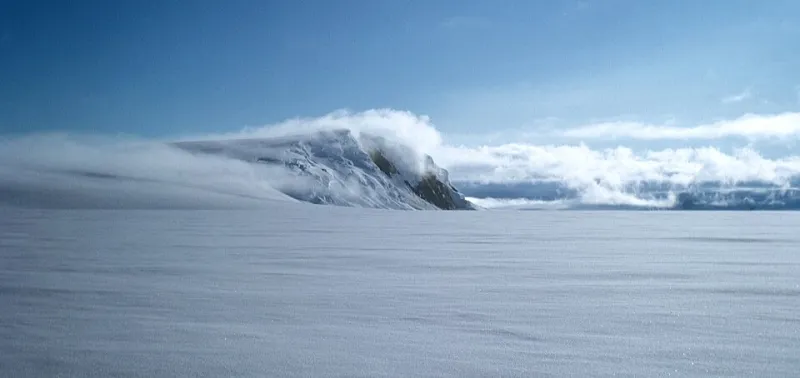
Photo by Photo by David Becker on Unsplash on Unsplash
Most photographers heading to Iceland for the first time pack their gear, double-check their memory cards, and assume the fundamentals they've been using for years will carry them through. Then the plane lands, the door opens, and the light — or the lack of it — immediately makes a liar out of everything they thought they knew.
Iceland is genuinely unlike any other destination when it comes to light. Not because the landscapes are dramatic (though they absolutely are), but because the physics of what's happening in the sky here operates at extremes that most cameras — and most photographers — simply aren't calibrated for by default. Understanding why that is, and what to do about it, is honestly half the battle.
The Problem With "Normal" Exposure Thinking
Back home in the States, most of us have internalized a pretty consistent rhythm. Golden hour happens twice a day, lasts maybe 45 minutes if you're lucky, and the rest of the time you're either in flat midday light or dealing with darkness. Your exposure instincts have been trained around that cycle.
Iceland breaks that cycle completely.
In June and July, the sun barely dips below the horizon. Reykjavik sees around 24 hours of usable daylight during peak summer, and even at 2 a.m., the sky holds this long, warm, low-angle glow that feels like golden hour just... never ended. Meanwhile, in December and January, you're looking at four hours of actual daylight — and most of that is a soft, diffused twilight rather than direct sun.
These aren't minor adjustments. These are fundamentally different lighting environments that demand fundamentally different approaches.
Shooting the Midnight Sun: When Bright Gets Weird
The midnight sun sounds like a gift, and in many ways it is. But it creates a specific exposure challenge that catches people off guard: you're essentially dealing with golden-hour-quality light that never stops. That means your camera is constantly fighting between the warm, relatively low intensity of that angled light and the fact that it's been "on" for 20 hours straight.
The biggest trap is overexposure. Because the light feels soft and warm, your eye tells you it's dim. Your camera's evaluative or matrix metering often agrees — and then blows out your highlights completely. Bright white glaciers, reflective water surfaces, and pale volcanic rock all become exposure nightmares if you're trusting your meter blindly.
What to actually do:
- Switch to spot metering and meter off your brightest significant element, not the overall scene
- Use exposure compensation aggressively — dialing down by -1 to -2 stops is not unusual when shooting toward reflective surfaces
- Shoot in RAW (seriously, this is non-negotiable in Iceland) so you have latitude to recover shadows without torching your highlights in post
- Consider graduated ND filters for landscapes where the sky and ground have wildly different brightness levels — which is basically every landscape here
Your histogram becomes your best friend in these conditions. Stop chimping the LCD screen and start reading the data. If your highlights are clipping, it doesn't matter how good the shot looks on a 3-inch screen in bright ambient light.
The Winter Equation: Darkness, Softness, and the Noise Problem
Flip the calendar to December and you're dealing with the opposite challenge. The light that does exist is genuinely beautiful — soft, directional, almost painterly — but it's brief, low-intensity, and often diffused through cloud cover. And then there's the aurora, which is its own entire exposure conversation.
Daytime winter shooting in Iceland means working with ISOs you might normally reserve for event photography in dark venues. ISO 800 to 3200 during the "bright" part of the day isn't unusual, especially on overcast days in fjords or canyon locations where the landscape itself blocks what little direct light there is.
Managing the exposure triangle in winter:
- Aperture: Open up, but not all the way. f/2.8 to f/4 gives you light without sacrificing too much depth of field on those sweeping landscape shots
- Shutter speed: Watch your floor carefully. Camera shake at 1/30 or slower will ruin sharpness on handheld shots, and Iceland's wind doesn't help
- ISO: Modern full-frame sensors handle high ISO well, but APS-C shooters need to be more conservative. Test your specific body before you go — shoot a dark scene at ISO 1600, 3200, and 6400 and actually look at 100% crops
- Embrace the noise: Some grain in a moody, dark Icelandic canyon shot isn't a flaw. It's texture. Don't over-smooth it in post
For aurora photography specifically, you're typically looking at ISO 1600–6400, apertures between f/1.8 and f/2.8, and shutter speeds of 5–25 seconds depending on how active the display is. Faster, brighter auroras need shorter exposures to preserve their structure. A slow, faint display can handle a longer shutter without smearing too badly.
Post-Processing: Two Completely Different Workflows
Here's something that doesn't get talked about enough: your Lightroom or Capture One workflow for summer Iceland shots should look almost nothing like your workflow for winter shots.
For midnight sun images, you're typically pulling highlights down hard, lifting shadows carefully, and managing that warm orange cast that can quickly go from "beautiful" to "fake-looking" if you push saturation. The HSL panel becomes crucial — specifically desaturating oranges and yellows slightly to keep skin tones (if you're shooting people) and golden light from going neon.
For winter and low-light images, you're doing the opposite — lifting exposure overall, managing noise reduction without destroying detail, and often working to preserve the color temperature of artificial light sources like geothermal pools, cabin windows, or aurora greens against a near-black sky. Be careful with the Dehaze slider in dark scenes; it tends to amplify noise aggressively.
One tip that works across both seasons: set a custom camera profile in your editing software that matches your specific sensor. Generic profiles often push contrast and saturation in ways that work fine for typical travel shots but fall apart in Iceland's extreme tonal ranges.
The Real Takeaway
Iceland rewards photographers who are willing to question their defaults. The exposure instincts you've built shooting in more predictable light — back in Denver, or Chicago, or wherever you're coming from — aren't wrong. They're just incomplete.
Come here ready to meter differently, shoot differently, and edit differently depending on the season. Come ready to read your histogram instead of your screen. And come ready to accept that the light here doesn't follow the rules you've been playing by.
That's not a problem. That's exactly why it's worth the flight.