What Your Camera Can't Record: The Frozen Sounds That Make Iceland Feel Alive

Photo by Photo by Roberto Reposo on Unsplash on Unsplash
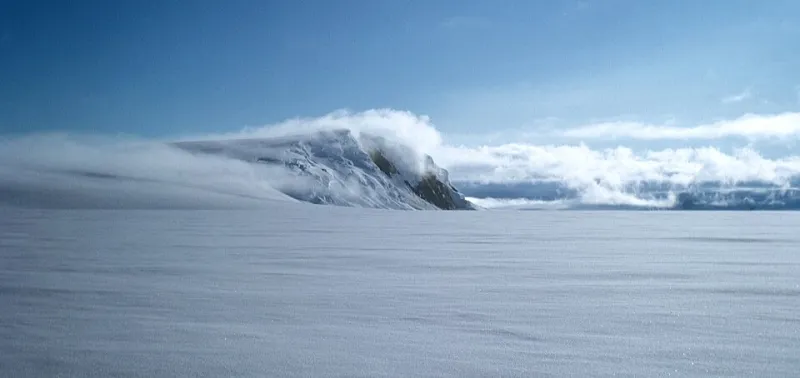
You've seen the photos. Towering blue ice walls reflected in glassy lagoons. Glaciers stretching to the horizon like frozen rivers caught mid-pour. Iceland's icy landscapes are some of the most photographed terrain on the planet, and for good reason — the visuals are genuinely staggering.
But here's something almost nobody talks about: the sound.
Stand at the edge of Jökulsárlón glacier lagoon on a still morning, and you'll hear something that no camera can capture. A low, resonant groan rises from somewhere deep beneath the surface. Then a sharp crack, like a rifle shot echoing off the surrounding hills. A chunk of ice the size of a school bus slowly tilts, sighs into the water, and sends ripples rolling toward your boots. The whole thing takes maybe thirty seconds. Your shutter fires. You get a great shot.
But the photograph will never tell anyone what that actually felt like.
The Sonic Gap in Iceland Photography
Photographers spend enormous energy thinking about light. Golden hour, blue hour, diffused overcast glow — entire articles (including plenty on this site) are dedicated to understanding how light behaves across Iceland's terrain. And that's completely valid. Light is the medium.
But sound is the context. And Iceland's frozen landscapes generate a sonic environment so specific, so strange, and so emotionally loaded that ignoring it means only half-understanding the place you're trying to document.
Glacial calving — the process where chunks of ice break free from a glacier's face — isn't a quiet event. It begins with a low vibration you feel in your chest before you hear it with your ears. The ice fractures along stress lines that have been building for years, sometimes decades, and when it finally lets go, the sound is somewhere between a thunderclap and a cannon blast. Photographers standing at Fjallsárlón or the edges of Vatnajökull often describe a kind of full-body startle response the first time it happens — a primal alertness that no amount of mental preparation quite eliminates.
That physiological reaction changes how you shoot. Your hands tighten on the camera. Your breathing shifts. Your eyes scan differently. The sound doesn't just accompany the visual event — it creates the emotional stakes of the moment.
Cracking Permafrost and the Language of Cold
Beyond the dramatic calving events, Iceland's frozen terrain speaks in subtler dialects. Walk across a snowfield in early morning, before the temperature has nudged upward at all, and the snow compresses beneath your boots with a sound that's almost musical — a high, dry squeak that signals extreme cold as clearly as any thermometer. Experienced Iceland guides often say they can estimate overnight temperatures just by listening to how the snow sounds underfoot.
Permafrost and deeply frozen ground crack and pop as temperatures shift, especially during Iceland's volatile shoulder seasons when a warm Atlantic front can push temperatures up ten degrees in an afternoon. These sounds are irregular, unpredictable, and slightly unnerving if you're not expecting them — like a house settling, but happening in the open wilderness. Photographers who camp near glaciated areas often report lying awake listening to the landscape readjust itself through the night.
Then there's the ice itself. Glacier ice, compressed over centuries, contains almost no air bubbles. When a piece breaks free and bobs in a lagoon, it melts differently than ordinary ice — slowly, with a faint hissing sound as ancient trapped air finally escapes. Stand quietly near the ice-strewn black sand beach at Diamond Beach, and you'll hear it: a faint, continuous fizzing from the ice chunks resting on shore, like a distant carbonated drink. It's one of Iceland's most quietly surreal experiences, and it's completely invisible in photographs.
Why This Matters for How You Shoot
Here's the practical argument: photographers who engage with Iceland's soundscape tend to develop better compositional instincts on the ice.
Sound is directional in ways that vision sometimes isn't. When you hear a calving event building — that preliminary groan, the initial fracture — your body naturally orients toward it before your eyes have confirmed what's happening. Photographers who have tuned into this audio cue consistently report being better positioned for the actual calving moment because they started moving earlier. The sound gave them a head start the visuals couldn't.
Similarly, the acoustic quality of a glacial environment shifts depending on weather and atmospheric conditions in ways that often predict how the light will behave. Sound travels differently in dense, humid air versus the sharp, dry cold of a high-pressure system. Seasoned Iceland photographers describe learning to read the sound of their environment as a kind of secondary weather forecasting — when the glacier sounds crisp and resonant, the light often follows suit.
The Emotional Memory Problem
There's a deeper issue here, one that goes beyond technique. When photographers return home and sit down to edit their Iceland images, they're working from visual memory — from what they saw. But most of what made those moments feel significant was acoustic.
The photograph of a calving glacier is striking. But what made you hold your breath in the field wasn't just the visual drama — it was the sound building beneath it, the physical vibration, the sudden silence that followed the splash. Strip all of that away, and the image, however technically beautiful, represents maybe sixty percent of the actual experience.
This creates a strange disconnect. Photographers share their Iceland work and say things like, "I can't really explain what it was like to be there." And that's true. But it's worth asking whether the inability to explain it is partly a failure of attention — a habit of filtering experience through the viewfinder and discarding everything the viewfinder can't hold.
Bringing Sound Back Into Your Iceland Story
You can't photograph sound, but you can let it change how you photograph everything else.
Some practical suggestions: spend at least one session at a glacier without your camera in hand. Just listen. Track where sounds are coming from, how they build, what follows what. You'll start to understand the ice as a dynamic, living system rather than a static backdrop — and that understanding will show up in how you frame and time your shots.
Consider keeping a voice memo running during your shoots. Not for any formal purpose, but as a personal record. When you're editing months later, playing back thirty seconds of glacial ambience while you work on an image can reconnect you to the emotional reality of the moment in ways that reviewing your raw files alone simply can't.
And when you share your work — whether that's on social media, in a gallery, or just showing friends your trip photos — try describing what you heard. Not as a caption, but as part of the story. "The ice was making this low groaning sound the whole time I was shooting" lands differently than any technical note about aperture or focal length. It puts people in the scene.
Iceland's frozen landscapes are a full sensory experience. The photographers who understand that tend to make images that feel fuller, more alive, more true — even when the camera could only capture the light.