Glaciers Speak If You Know How to Listen: Iceland's Most Unforgettable Acoustic Landscapes

Photo by Photo by Eric Welch on Unsplash on Unsplash
Every photographer who lands in Iceland has a mental checklist. Jökulsárlón at golden hour. Vatnajökull stretching toward the horizon. The blue-white geometry of ancient ice against a moody sky. These are the images that fill feeds, win contests, and end up framed on living room walls back home in Denver or Portland or wherever you flew in from.
But here's the thing nobody tells you before you show up: Iceland's glaciers aren't just a visual experience. They're loud. Profoundly, unexpectedly, sometimes unsettlingly loud. And if you spend your entire visit staring through a viewfinder, you might walk away with a full memory card and a weirdly incomplete experience.
The acoustic dimension of Iceland's ice is one of the most underrated aspects of traveling here. Once you start paying attention to it — really paying attention — it changes how you photograph, how you remember, and honestly, how you feel about these places.
What Ice Actually Sounds Like (It's Not What You Expect)
Most people picture glaciers as silent. Frozen. Still. That assumption gets corrected fast.
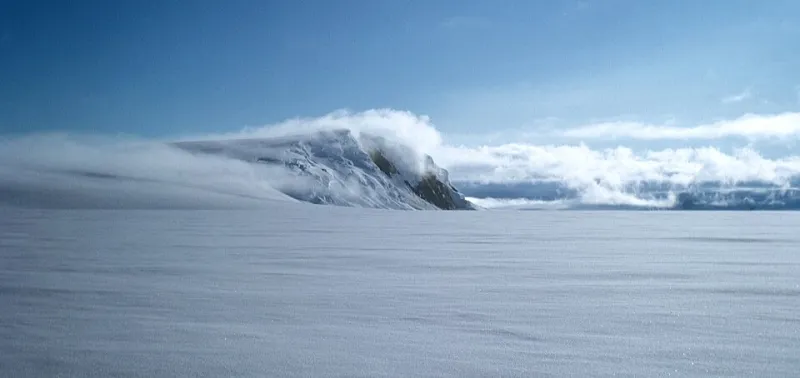
Vatnajökull, Europe's largest glacier by volume, is in near-constant motion. The ice shifts, compresses, and fractures under its own weight, producing a low-frequency creaking that you feel as much as hear. Stand quietly on or near the glacier's edge on a calm day and you'll pick up a deep, almost architectural groaning — like a building settling, except the building is the size of a small U.S. state and made entirely of ancient compressed snow.
At Jökulsárlón glacier lagoon, the sounds shift entirely. Here, chunks of ice that have calved off Breiðamerkurjökull float in the lagoon before drifting out to sea. When a new piece breaks free, the crack is shockingly violent — a sound somewhere between a gunshot and a thunderclap, echoing across the water and bouncing off the surrounding hills. After the initial break comes a secondary cascade of sounds: splashing, gurgling, and then a strange hollow knock as the newly formed iceberg bobs and collides with its neighbors.
If you've only seen Jökulsárlón in photos, you've only seen half of it.
Why These Sounds Matter for Storytelling
For photographers who are serious about visual storytelling, audio might seem beside the point. But think about how you actually remember places. Research on memory consistently shows that sound is one of the most powerful triggers we have — more immediate, in many ways, than visual recall. The crack of calving ice at Jökulsárlón, heard once, tends to stick around in memory long after the specific details of a photograph have blurred.
This has real implications for how you share your Iceland experience. If you shoot video — even short clips for social or behind-the-scenes content — the ambient sound you capture can transform a clip from a pretty moving image into something that genuinely transports a viewer. The difference between footage with rich, natural glacier audio and footage with wind noise or dead silence is enormous. One feels like Iceland. The other feels like a screensaver.
Even if you're a pure stills photographer, training yourself to listen before you shoot changes your relationship to a scene. It slows you down. It makes you more present. And presence, almost without exception, makes for better photographs.
Preparing Your Ears (and Your Gear)
You don't need to be an audio engineer to start capturing glacier sound. But a little preparation goes a long way.
Bring a dedicated field recorder if you can. Devices like the Zoom H5 or the Tascam DR-40X are compact, relatively affordable, and produce audio that blows away anything your camera's built-in microphone can capture. Iceland's wind is relentless, so a good windscreen — a furry deadcat cover — is non-negotiable. Without one, your recording will be mostly wind roar.
Use directional microphones thoughtfully. At a place like Jökulsárlón, the interesting sounds come from multiple directions simultaneously. A stereo setup captures the spatial dimension of the lagoon — ice shifting to the left, water lapping to the right, calving events happening unpredictably from across the water. That spatial quality is what makes a recording feel immersive rather than flat.
Time your visits for low wind. This sounds obvious, but it's worth planning around. Early mornings at Jökulsárlón tend to be calmer than afternoons. Calmer air means less wind noise, which means the subtler sounds — the ticking of ice contracting, the hollow resonance of a floating berg — actually become audible. Those subtle sounds are often the most interesting ones.
Record more than you think you need. Calving events at Jökulsárlón can't be predicted. You might wait forty-five minutes and hear nothing dramatic, then get three large cracks in ten minutes. Leaving your recorder running while you shoot stills means you capture what you can't anticipate.
The Glaciers Worth Listening To
Not all of Iceland's glaciers offer the same acoustic experience. Here's a quick orientation:
Jökulsárlón is the most dramatic for calving sounds — the scale of the bergs and the openness of the lagoon create natural amplification. The Diamond Beach, just across the road, adds the sound of waves dragging ice across black sand, which is its own strange, grinding music.
Vatnajökull (accessible via guided glacier walks) rewards patience with low, structural sounds from deep within the ice. This is where you want to stand still and just listen, ideally away from your group for a moment.
Snæfellsjökull, out on the Snæfellsnes Peninsula, is smaller and more accessible for independent visitors. On still days, the glacier produces quiet creaking that feels almost intimate compared to the drama of the south coast glaciers.
Skaftafell area glaciers, particularly Svínafellsjökull, offer close-up access that lets you hear the constant small sounds of active ice — dripping meltwater, the tick of surface contraction, the occasional deeper shift.
A Different Kind of Memory Card
There's a reason Iceland keeps pulling people back. Part of it is the light, which is genuinely unlike anywhere else on earth. Part of it is the scale. But part of it — and this is the part that's hard to put in a caption — is the way this place engages every sense you have.
The glaciers are not passive subjects. They're moving, changing, making noise, responding to temperature and pressure in ways that play out acoustically in real time. When you start listening to them the way you've been trained to look at them, something shifts in the experience.
You stop being a photographer extracting an image from a landscape. You start being a person inside one.
Bring your recorder. Leave some space on your schedule to just stand there with your ears open. And the next time someone asks you what Jökulsárlón is like, you'll have an answer that goes well beyond whatever you managed to capture on your camera.