Standing Alone at the Edge of Everything: Iceland's Beautiful, Aching Solitude
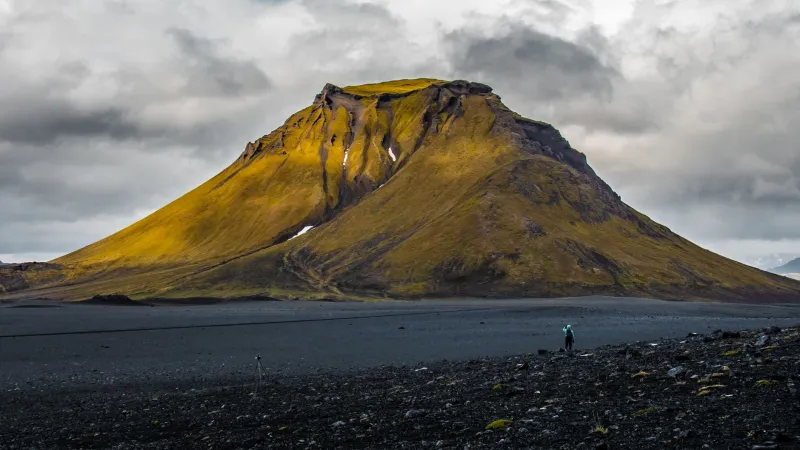
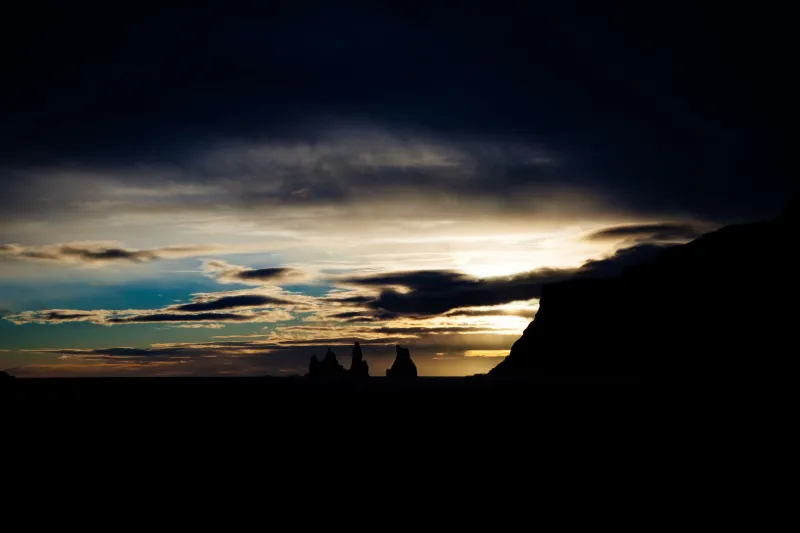
There's a specific kind of silence that greets you when you pull over on the Snæfellsnes Peninsula at 2 a.m. in July, the sun hanging at an impossible angle just above the horizon, painting everything amber and violet. You step out of the car. You raise your camera. And then it hits you — this staggering, almost unbearable feeling that no one else on earth is seeing exactly what you're seeing right now.
That feeling? It's not quite joy. It's not quite sadness. It's something in between, something most photographers who've spent real time in Iceland will recognize immediately even if they've never had the words for it.
Iceland does this to people. Regularly. On purpose, it seems.
When the Frame Feels Too Big for One Person
American travelers, especially those coming from cities or suburbs, often arrive in Iceland expecting to feel small. What they don't expect is to feel alone in a way that's almost physical. Back home, even the most dramatic landscapes — the Grand Canyon, Glacier National Park, the Oregon coast — tend to come with crowds, parking lots, guardrails, and gift shops. There's always evidence of other humans nearby, always a reminder that you're part of a shared experience.
Iceland strips that away fast.
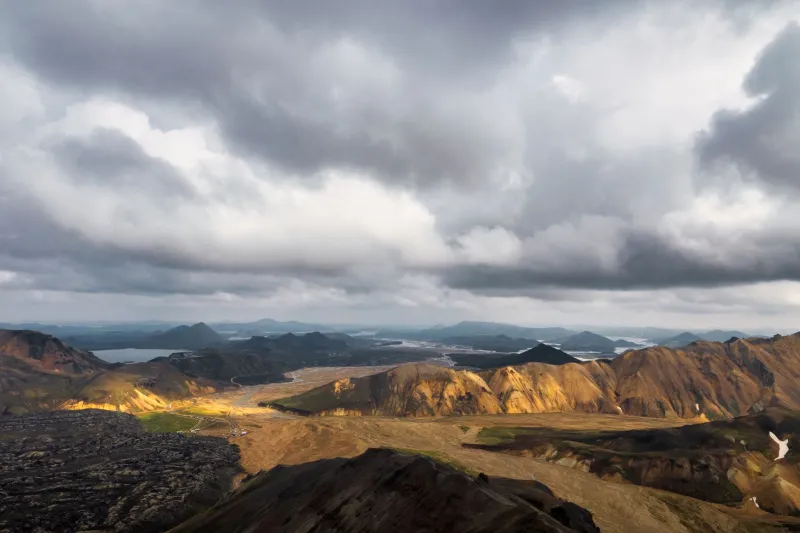
You can drive for 45 minutes on the Ring Road and not pass another vehicle. You can hike to a waterfall that would be absolutely mobbed in any other country and find yourself utterly, completely alone with it. And when you lift your camera to capture that waterfall, that glacier tongue, that lava field stretching to the horizon, something strange happens: the act of photographing it makes the solitude louder.
Because here's the thing about photography — it's an inherently social impulse. We take photos to share them, to say look at this, to connect with other people through images. But in Iceland, the gap between the moment you're experiencing and the moment anyone else will ever see your photo feels enormous. You're standing in front of something that might be the most beautiful thing you've ever witnessed, and you're completely, utterly by yourself.
The Camera as Companion — and the Limits of That Arrangement
A lot of photographers talk about their gear as a kind of companion, a reason to engage more deeply with a place rather than just passing through it. In Iceland, that relationship gets complicated.
The camera gives you something to do with your hands. It gives you a frame, a focal point, a way of processing the visual chaos of a place that refuses to behave like anywhere you've been before. When the light does something genuinely insane — and in Iceland, it does this constantly — having a camera in your hands means you have a response ready. You're not just standing there gaping. You're working.
But the camera can't share the moment with you. It can record the light on the glacier, but it can't feel the cold wind coming off the ice, can't hear the distant crack of calving, can't sit with you in the silence afterward when you lower it from your eye and realize your hands are shaking a little — not from the cold, but from something harder to name.
That's the paradox. The more photogenic the moment, the more completely Iceland tends to isolate you inside it.
Why That Tension Actually Matters
Here's what's interesting though: most photographers who've experienced this don't describe it as a negative. Uncomfortable, yes. Disorienting, sometimes. But overwhelmingly, the solitude that accompanies Iceland's most visually extraordinary moments is described as meaningful in a way that crowded, curated travel experiences rarely are.
When you're standing alone in front of Kirkjufell at golden hour, or watching the northern lights perform their slow electric dance over a frozen lake with no one else around, you can't outsource the experience. You can't look to the person next to you to confirm that yes, this is incredible, yes, this is worth feeling something about. You have to sit inside the feeling yourself, without validation, without a shared reaction to anchor you.
That's actually pretty rare in modern travel. And it turns out that rarity is part of what makes Iceland photographs feel different from photographs taken almost anywhere else. The images carry the weight of that solitude. You can feel it in them even when you can't explain why.
Reconciling the Joy and the Ache
So how do you actually deal with this while you're in it? A few things that experienced Iceland travelers have found genuinely useful:
Let go of the urge to immediately share. The reflex to post, to text someone, to narrate the moment in real time can actually short-circuit the experience itself. Try sitting with a moment fully before reaching for your phone. The photo will still be there. The feeling, if you rush past it, might not be.
Journal, even badly. A lot of photographers who travel solo in Iceland keep some kind of written record — not polished prose, just notes. What the air smelled like. What sound the gravel made underfoot. What they were thinking about when the light changed. These details don't make it into the photos, but they make the photos make sense later.
Acknowledge the ache instead of explaining it away. There's a tendency to reframe the loneliness as something else — as focus, as presence, as creative solitude. And sometimes it is those things. But sometimes it's just loneliness, and that's okay too. Iceland is a place that makes you feel things, and not all of them are comfortable. That's not a malfunction.
Understand that the solitude is part of the story. The most authentic Iceland travel experiences aren't the ones where everything went perfectly and the light was ideal and you had great company. They're the ones where you were genuinely moved by something, even if — especially if — that something also left you a little unsteady.
What You Bring Back That Doesn't Fit in a Memory Card
The photographs you take in Iceland are real. The light you captured was real. But the most lasting thing most people bring back from Iceland isn't on any hard drive.
It's a recalibration. A shift in how they understand their own capacity to sit with beauty that has no audience. A new tolerance for awe that doesn't come with a crowd to share it, a caption ready to go, a clean narrative arc.
Iceland teaches you to witness things fully even when — especially when — you're the only witness.
That's not a lonely feeling, once you get used to it. It's actually one of the more quietly profound things travel can do to a person.
And yeah, the photos aren't bad either.