Surrender to the Shot: Why Iceland Rewards Photographers Who Let Go
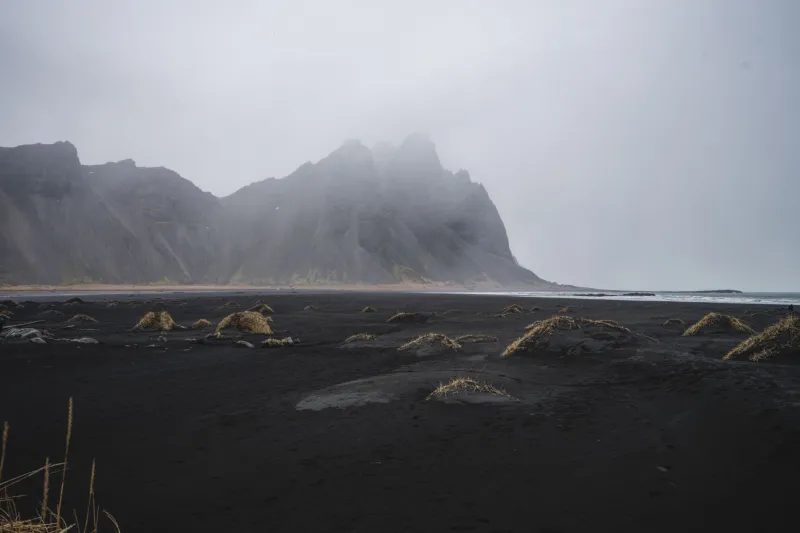
You've done everything right. You've studied the sun angles on PhotoPills, bookmarked seventeen different compositions on Google Maps, and packed your gear bag like you're prepping for a moon landing. You land in Reykjavik, drive out toward the Snæfellsnes Peninsula, and watch a wall of fog swallow the volcano you flew five thousand miles to photograph.
Congratulations. Iceland just started teaching you something.
This is the Iceland paradox — the place that promises some of the most dramatic light on the planet is also the place most likely to deny it to you on command. And somehow, that's the reason serious photographers keep coming back.
The Myth of the Perfect Conditions
There's a fantasy version of an Iceland photography trip that lives on Instagram. Golden hour over Vestrahorn. The aurora exploding above a frozen lagoon. Lupine fields bathed in that impossible pink twilight. These shots exist. People take them. But what the feed doesn't show you is the three days of sideways rain, the zero-visibility fog, and the afternoon where the light just went completely flat and stayed there.
The photographers who walk away with genuinely original work aren't the ones who waited out the bad conditions. They're the ones who walked directly into them.
That shift in mindset — from chasing ideal light to working with whatever Iceland hands you — is where personal style actually gets built.
When the Plan Falls Apart, the Real Work Begins
Take what happened to Portland-based travel photographer Dana Kessler on her second Iceland trip. She'd spent weeks planning a sunrise shoot at Kirkjufell, the iconic arrow-shaped mountain on the Snæfellsnes coast. She woke at 3 a.m., drove through the dark, and arrived to find the mountain completely hidden behind low cloud cover.
Instead of retreating to the car, she stayed. She started shooting the foreground — the small stream, the wet rocks, the way the mist moved across the water in long-exposure frames. By the time the cloud briefly lifted forty minutes later, she had a sequence of abstract waterscape images she'd never planned to take. Those ended up being the shots she licensed.
Kirkjufell, when it finally appeared, was almost anticlimactic.
"Iceland basically told me to stop looking up and start looking down," she later said. "That's not something a shot list teaches you."
Constraint Is a Creative Tool
This isn't just anecdote. There's a well-documented principle in creative fields that constraint drives innovation. When you remove infinite options, the brain stops paralyzed by choice and starts solving problems. Iceland's weather is essentially a constraint engine disguised as a landscape.
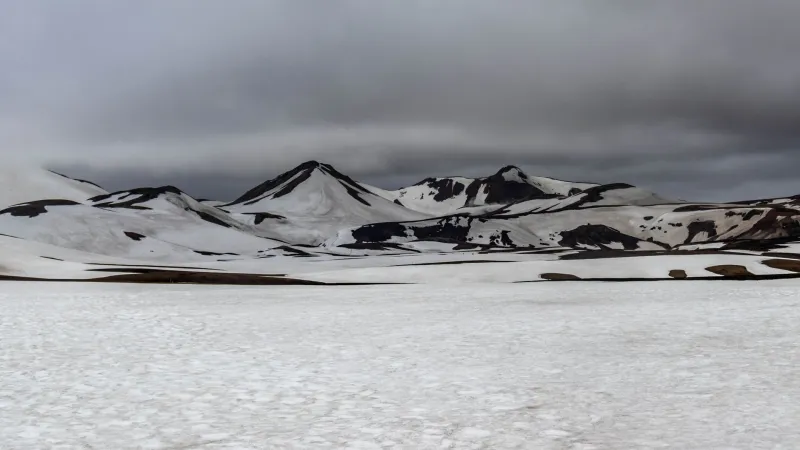
Flat light forces you to think about texture instead of drama. A whiteout blizzard turns a composition into pure geometry. Rain on a lens, rather than ruining a shot, can create a filter effect that no Lightroom preset comes close to replicating. These aren't happy accidents — they're invitations.
The photographers who struggle most in Iceland are often the ones with the most rigid expectations. The ones who thrive tend to operate more like jazz musicians than classical performers: they know their instrument cold, but they're ready to improvise when the set list goes out the window.
Reading Iceland's Visual Language
Part of what makes Iceland so uniquely challenging — and rewarding — is that its light doesn't behave the way American photographers are trained to expect. Back home, golden hour is golden hour. You've got a window, you work it, you move on.
In Iceland, that calculus breaks entirely. In summer, the sun barely sets. You can shoot warm, low-angle light at midnight, then again at 2 a.m. as it creeps back up. In winter, you might get three hours of usable daylight, and even that can swing from brilliant to overcast in twenty minutes.
The photographers who adapt fastest are the ones who stop treating light as a resource to be harvested and start treating it as a conversation partner. Iceland will change the subject on you. The skill is learning to follow without losing your voice.
Practical Ways to Practice Letting Go
If you're planning a trip and want to actually internalize this approach rather than just reading about it, here are a few habits worth building before you go:
Ditch the rigid shot list. Keep a loose inspiration board — locations you're curious about, moods you want to explore — but leave the specific compositions open. Give yourself permission to be surprised.
Set a "stay" rule. When conditions feel wrong, commit to staying in that location for at least thirty minutes before moving. Most photographers bail too fast. The light almost always shifts, and sometimes the worst conditions produce the most unexpected frames.
Shoot in sequences, not singles. Rather than hunting for one definitive image, document the way a scene changes over time. Fog rolling in. A storm clearing. These sequential narratives often tell richer stories than any single hero shot.
Turn the camera on what you're avoiding. If the main subject is obscured, photograph what's blocking it. Mist, rain, snow, flat light — these are subjects, not obstacles.
The Shots Iceland Keeps for Itself
There's a certain category of Iceland image that never makes it onto the mood boards and never goes viral — not because it's bad, but because it's too specific, too strange, too tied to a moment that couldn't have been planned. A shaft of light cutting through a lava tube at an angle no app predicted. The particular gray of an overcast sky reflected in a roadside puddle. A double rainbow that lasted forty-five seconds over a sheep farm outside Selfoss.
These are the shots Iceland keeps for the people willing to stay present instead of staying on-script.
The photographers who find them aren't luckier than everyone else. They're just more comfortable with uncertainty — which, in Iceland, is the only reliable forecast you're going to get.
So pack your gear. Study your locations. And then, when Iceland tears up your plans and hands you something you didn't expect, take a breath and shoot what's actually in front of you.
That's usually the better story anyway.