Why Iceland Breaks Your Eyes Open — And Makes You See Light Differently Forever
Most photographers come to Iceland chasing something specific. The aurora. The midnight sun. The dramatic cliffs of the Westfjords catching a storm at golden hour. They arrive with a shot list, a stack of memory cards, and a very particular idea of what they're going to bring home.
What they don't expect is what Iceland does to their eyes.
Not in a metaphorical sense — though that happens too. In a genuinely physiological, almost neurological way, Iceland rewires how you process light. Spend a week or two here, really paying attention, and you'll start noticing things your camera never flagged before: a faint violet cast on the underside of a cloud, the way diffuse overcast light seems to come from everywhere and nowhere at once, the strange warm-cool split that happens when low sun bounces off black sand and hits a glacier face from below. You'll start seeing these things back in Chicago, in Phoenix, in rural Vermont — and wondering why you never noticed them before.
So what exactly is going on here?
The Science Behind Iceland's 'Light Advantage'
Let's start with geography. Iceland sits between roughly 63 and 66 degrees north latitude, which puts it just below — and in some places right at — the Arctic Circle. At that latitude, the sun doesn't behave the way it does in the lower 48. Even in summer, it never climbs very high in the sky. It arcs sideways across the horizon rather than overhead, which means you're almost always shooting in the equivalent of golden hour. The light is perpetually low, warm, and raking — the kind of light photographers in Los Angeles or Atlanta might get for maybe 30 minutes twice a day.
But it's not just the angle. It's the quality.
Iceland has some of the cleanest air on the planet. No industrial pollution, minimal particulate matter, and consistent Atlantic winds that scrub the atmosphere constantly. In most of the US, even in rural areas, the air carries enough haze to slightly diffuse and warm distant light. You might not notice it consciously, but your camera does — and so does your eye, once you've spent time somewhere without it. In Iceland, distant mountains look almost unnervingly sharp. Color doesn't bleed or shift the way it does across a hazy American horizon. The light arrives at your lens closer to its true spectral character.
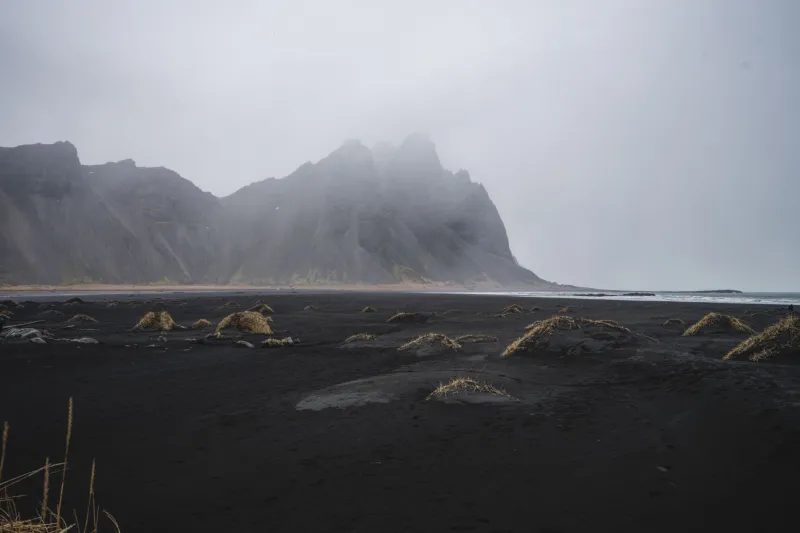
Then there's the volcanic landscape itself. Dark basalt, obsidian beaches, and fields of lava rock absorb light rather than bouncing it back. That changes the ambient fill light dramatically. In a green meadow or on a sandy beach in Florida, the ground reflects a significant amount of light upward, softening shadows and warming the overall scene. In Iceland, that reflected fill is often much cooler and subtler. Shadows stay shadows. Contrast holds.
What Your Eye Learns Without You Realizing It
Here's where it gets interesting. Photographers who spend meaningful time in Iceland — not a rushed 72-hour layover, but a real week or more of shooting in varied conditions — consistently report that their post-trip work improves. Not just the Iceland shots. All of it.
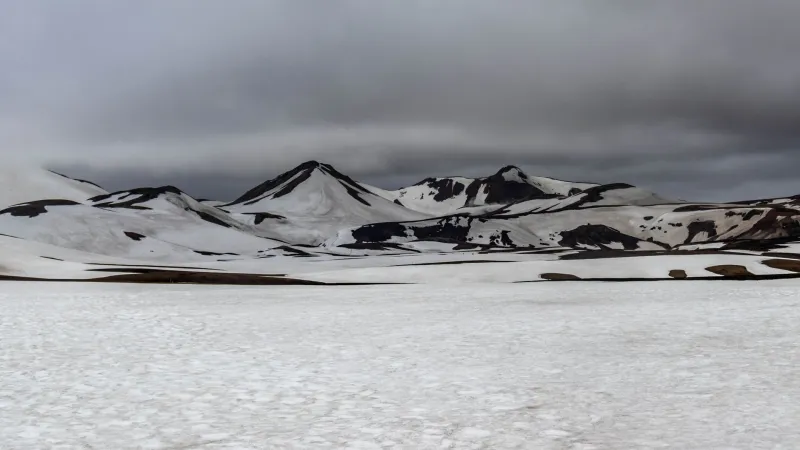
The reason is attention calibration. Iceland's light is subtle in ways that punish inattention. The difference between a flat, forgettable shot and an extraordinary one might come down to noticing a two-minute window when the overcast softens just enough to let a streak of warm light through, or recognizing the moment when mist off a glacial river creates a natural diffusion effect you'd never get in a studio. If you're not watching — really watching — you'll miss it entirely.
Forced to pay that level of attention for days on end, your visual perception sharpens. You start catching micro-shifts in color temperature. You develop a feel for how quickly light quality is changing and in which direction. You stop waiting for the 'perfect' moment and start reading the direction of the light — where it's coming from, where it's going, and what it's going to do to your subject in the next sixty seconds.
Back home, that skill doesn't just evaporate. You start seeing your familiar landscapes differently. That flat midday light you always avoided? You start noticing the moments when a cloud breaks it into something workable. The overcast days you used to write off? You recognize the soft, even illumination for what it is.
Optical Phenomena You Won't Find on a Shot List
Beyond the baseline quality of Iceland's light, the country produces atmospheric phenomena that are genuinely rare — and genuinely instructive to witness.
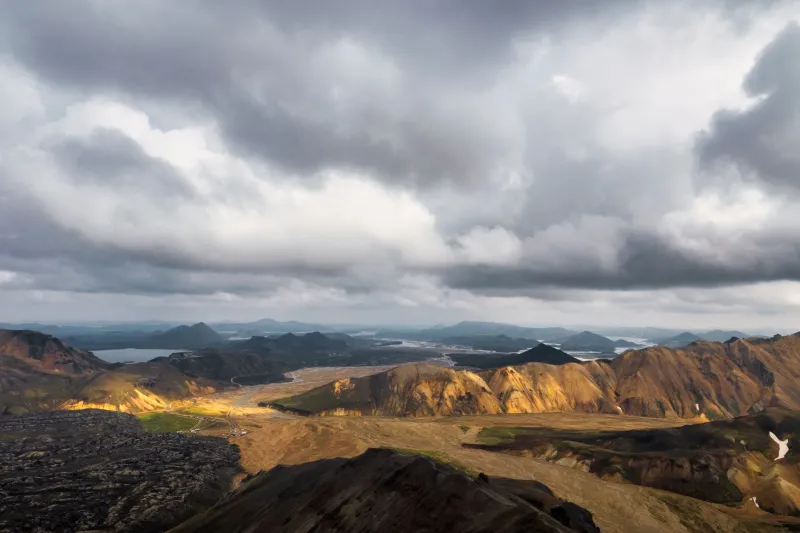
Sundog formations, caused by ice crystals in the atmosphere refracting sunlight, appear with surprising regularity in Iceland's winter sky. They look like secondary suns flanking the real one, and photographing them teaches you something immediate about how light scatters and splits. Crepuscular rays — those dramatic god-beam shafts of light — appear constantly over the highlands, because the combination of volcanic dust, moisture, and low sun angles creates ideal conditions for them. Glacial lagoons like Jökulsárlón produce a kind of light you simply cannot replicate: the ice filters and scatters blue wavelengths in a way that makes the water glow from within.
Each of these phenomena is a masterclass in how light behaves physically. Photograph them enough and you stop thinking of light as a given — a thing that just is — and start thinking of it as a dynamic, moving system you can learn to anticipate.
Training Your Eye Before Your Camera
If you want to get the most out of Iceland's light education, the advice is counterintuitive: put the camera down more often. Not forever. But before you shoot, spend five minutes just looking. Identify the primary light source and its direction. Note the color temperature — is it warm, cool, neutral? Look at the shadows and assess their density and edge quality. Watch what the light is doing to surfaces at different distances.
Then pick up the camera.
This habit — observing before capturing — is something most photographers intellectually know they should do but rarely practice consistently. Iceland's light makes it feel urgent in a way that flat, predictable light never does. When conditions are changing this fast and this dramatically, the cost of not paying attention is immediate and visible.
That urgency is the real gift Iceland gives you.
The Light That Follows You Home
There's a reason photographers talk about Iceland differently than they talk about other destinations. It's not just the scale of the landscape or the drama of the weather. It's the way the place insists on your full attention — visually, creatively, technically. Iceland's light doesn't accommodate laziness. It rewards presence.
And presence, once practiced, doesn't stay in Iceland. It comes home with you. You'll find yourself pausing on an ordinary Tuesday morning in your backyard, noticing the way low winter sun is cutting across your neighbor's fence in a way you've never quite registered before. You'll stop dismissing overcast skies as photographic dead ends. You'll start seeing light as something alive and worth tracking — not just a setting to correct in post.
That's the real souvenir Iceland sends you home with. Not a print, not a preset, not a gear list. A different pair of eyes.