Iceland Smells Like Nowhere Else on Earth — And That's the Point
You've seen the photos. The black sand beaches, the electric curtains of aurora, the glaciers that look like they were carved by something ancient and deliberate. Iceland is relentlessly, almost aggressively visual. So it makes sense that most people who visit — especially those of us who show up with camera bags and shot lists — spend the whole trip looking.
But here's the thing nobody really warns you about: Iceland will hit your nose before it hits your eyes.
That first exhale of sulfur when you step out near a geothermal vent. The sharp, mineral-clean smell of glacial meltwater rushing past your boots. The faint char in the air near a fresh lava field. These aren't just background details. They're part of the landscape's actual story, and once you start paying attention to them, your whole experience of the place shifts.
The Sulfur Question (Yes, It's Real)
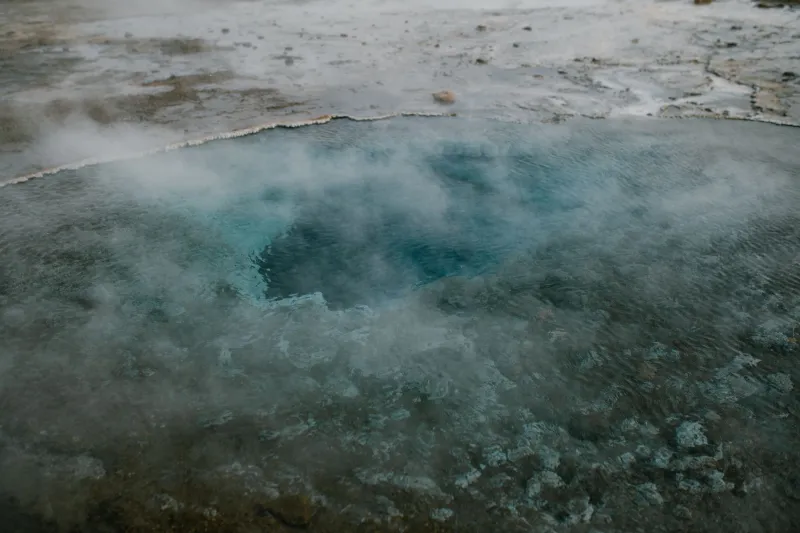
Let's get the obvious one out of the way. If you've ever visited the Blue Lagoon or driven near Krysuvik or the Reykjanes Peninsula, you already know that Iceland can smell like a lit match that never quite goes out. That sulfurous edge — hydrogen sulfide rising from geothermal activity beneath the surface — is one of the most polarizing first impressions the country makes.
Some people hate it. Some people, after a few days, barely notice it. And a surprising number of travelers end up associating it with something weirdly comforting — the smell of the earth doing something alive and loud just beneath the surface.
What's interesting from a photography standpoint is how that smell changes your relationship to the landscape you're trying to capture. Standing at the edge of a steaming fumarole field, you're not just looking at something alien and beautiful. You're inside it. Your body is registering it on a cellular level. That changes how you compose, how long you linger, how patient you're willing to be with the light.
Glacial Meltwater Has a Smell (And It's Remarkable)
This one surprises people. Water doesn't smell like anything, right? Except glacial meltwater absolutely does — clean in a way that almost has a temperature to it, faintly metallic, like cold stone and altitude and time compressed into liquid form.
When you're standing near Skaftafell or hiking close to one of the outlet glaciers on Vatnajokull, that smell is everywhere. It's coming off the streams, rising from the wet rock, drifting in the mist. It smells the way the word "ancient" would smell if it were a thing you could inhale.
For photographers, this matters more than it might seem. Smell is one of the most powerful triggers for memory and emotional response — science has been pretty clear on that for decades. When you're deep in the sensory experience of a place, your instincts sharpen. You notice things. You slow down. You stop trying to replicate a shot you saw on Instagram and start responding to what's actually in front of you.
Volcanic Ash and the Smell of Something Newly Made
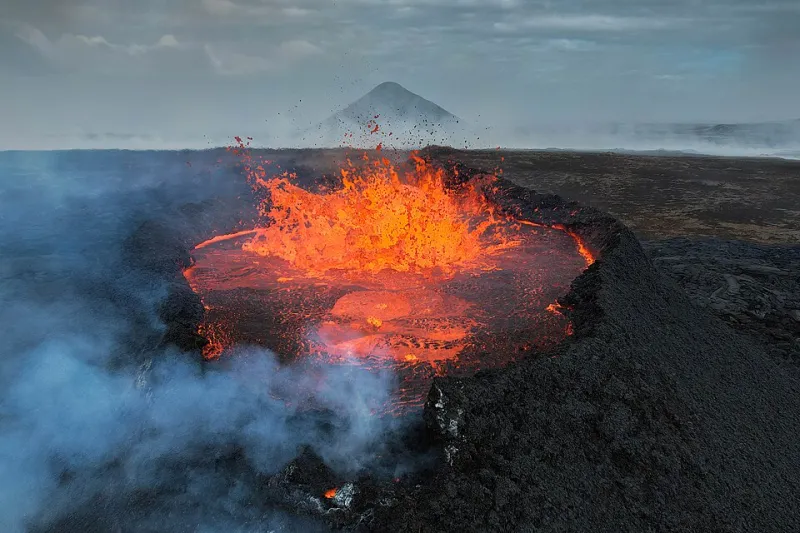
Iceland is a young country in geological terms. Parts of it are genuinely new — lava fields that formed within living memory, craters that are still warm, landscapes that haven't had time to grow a single blade of grass yet. And those places have a smell.
Fresh volcanic rock has a dry, flinty quality to it, almost dusty. Older lava fields, where moss has started to take hold, smell green and damp in a way that's almost forest-like, except there are no trees. The Laki craters area, the lava tubes near Dimmuborgir, the raw terrain around Landmannalaugar — each one has its own olfactory fingerprint.
When you're photographing in these environments, tuning into that smell is a way of grounding yourself in the specific character of the place. It keeps you from treating every lava field as interchangeable. It reminds you that you're not just in Iceland generically — you're in this part of Iceland, at this moment, in conditions that will never repeat exactly.
The Ocean Air on Iceland's Coastlines
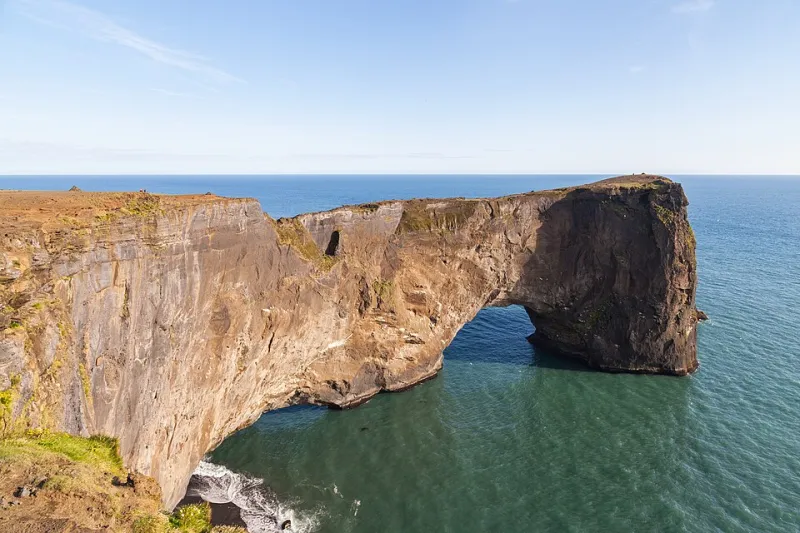
Iceland's coastline is a whole other sensory world. The North Atlantic doesn't smell like the Pacific or the Gulf Coast or the Atlantic off Cape Cod. It's colder, rawer, with a brine that feels almost aggressive. There's kelp and salt and something almost ferrous underneath it all — the smell of a sea that doesn't mess around.
At places like Jokulsarlon, where icebergs drift toward the ocean and eventually wash up on Diamond Beach, you get this remarkable combination: the cold mineral smell of glacial ice meeting the salt punch of the open ocean. Standing there, your nose is processing a story about climate and geography and time that your camera can only hint at.
That's the thing worth sitting with. A photograph of Diamond Beach is gorgeous. But a photograph of Diamond Beach taken by someone who was fully present in that environment — who felt the wind, smelled the salt and ice, heard the waves — carries something different. You can't always articulate what it is, but you can usually feel it.
Using Scent as a Photography Cue
Here's a practical idea worth trying on your next Iceland trip. Before you lift your camera at a new location, take thirty seconds to just breathe. What do you smell? Is it geothermal, glacial, oceanic, volcanic? Is there rain coming? (Rain in Iceland has a smell — petrichor mixed with something colder and more mineral than you're probably used to back home.)
Using scent as an orientation tool does a couple of things. It slows you down, which is almost always good for photography. And it deepens your connection to the specific character of the environment, which tends to show up in how you choose to frame and light a shot.
The photographers who consistently produce the most compelling Iceland images aren't just technically skilled. They're present in a way that goes beyond what's in the viewfinder. Sensory awareness — all of it, not just the visual — is a big part of how that presence gets built.
The Memory You Didn't Know You Were Making
Years after a trip to Iceland, most people find that what they remember most vividly isn't the photos they took. It's the moments when they were too caught up in the experience to think about taking a photo at all. The smell of sulfur on a cold morning. The way glacial water felt on their hands and what it smelled like up close. The char in the air near a lava field.
Those sensory memories are the ones that stick. They're the ones that make you want to go back.
Iceland is a visual destination — no argument there. But it's also a place that rewards travelers who are willing to put the camera down for a moment and just breathe it in. The story the landscape is telling isn't only written in light and shadow. Some of it is written in sulfur, salt, ice, and ash.
And that part of the story is worth paying attention to.