Once You've Walked on Black Sand, Every Other Beach Feels Like a Lie
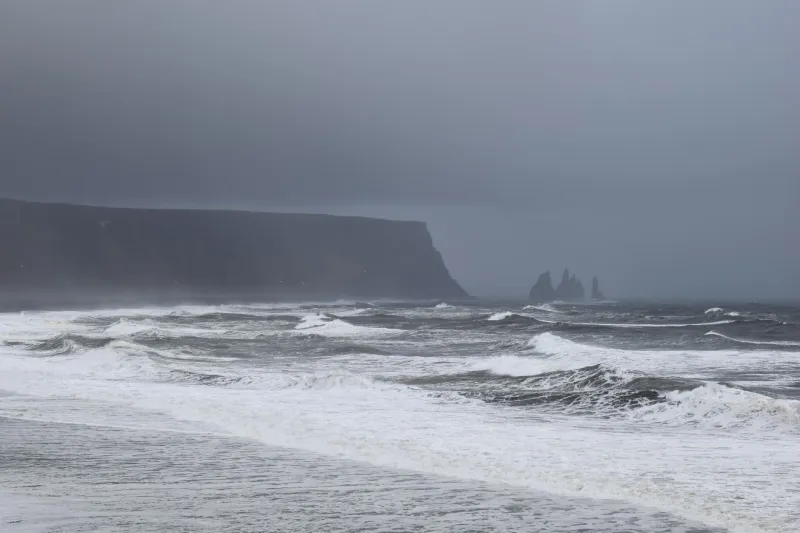
There's a specific moment that happens to almost every first-time visitor to Iceland's black sand beaches. You're standing at the water's edge, volcanic grains under your boots, a wall of basalt columns rising behind you, and the North Atlantic doing its absolute worst about twenty feet away — and something shifts. It's not just that it's beautiful. It's that it's true in a way that's hard to articulate and nearly impossible to forget.
That shift? It's permanent. And it will follow you home.
Where the Sand Actually Comes From
Before we get into the emotional wreckage these beaches leave behind, it's worth understanding what you're actually standing on — because the science is just as wild as the scenery.
Iceland's black sand isn't imported or symbolic. It's the direct result of volcanic rock — primarily basalt — being pulverized over thousands of years by relentless wave action and glacial grinding. When lava flows meet the ocean, the rapid cooling fractures the rock into fragments. The ocean takes over from there, breaking those fragments down into the fine, dark grains that make up beaches like Reynisfjara, near the village of Vík, or the boulder-strewn stretch of Djúpalónssandur on the Snæfellsnes Peninsula.
Unlike the calcium carbonate that makes up tropical white sand — essentially crushed shells and coral — Icelandic black sand is pure geology. Iron-rich, dense, and volcanic in origin. It doesn't sparkle. It absorbs light rather than reflecting it. In wet conditions, it turns almost mirror-black, reflecting the sky and the cliffs above it with an intensity that feels almost digital.
This isn't a beach that's trying to charm you. It's just being exactly what it is.
The Sensory Experience Nobody Warns You About
Most people expect the visual drama — they've seen the Instagram posts, they know Reynisfjara is famous. What they don't expect is everything else.
The sound is different on a black sand beach. The waves at Reynisfjara are notoriously powerful and unpredictable, and the way they pull back across coarse volcanic grains produces a grinding, almost mechanical roar that has nothing in common with the rhythmic shushing of a Florida shoreline. It's aggressive. It demands attention.
The texture underfoot is denser and less forgiving than white sand. It doesn't shift and swallow your feet the same way. Walking on it feels more purposeful, more grounded — like the earth is reminding you that you're on solid volcanic rock that just happens to have been worn down to this particular state.
And then there's the temperature. Even on a relatively mild Icelandic summer day, black sand absorbs heat differently than light-colored sand. In direct sun, patches of it can be surprisingly warm to the touch. In the shadow of the Reynisdrangar sea stacks, it stays cool and damp. The beach has microclimates. It has moods.
All of this adds up to a sensory experience that's more intense, more layered, and more demanding than most coastlines you've ever visited. You don't passively enjoy a black sand beach. You engage with it.
The Psychological Rewiring
Here's the part that nobody puts in the travel brochure: Iceland's black sand beaches quietly recalibrate your standards for what a coastline is supposed to feel like.
American beach culture is built around a specific aesthetic — pale sand, blue-green water, warmth, ease. The beach as vacation. The beach as escape. That's a perfectly valid thing to love, and none of this is a knock on it. But after you've stood at Reynisfjara with freezing spray on your face, watching waves that could genuinely kill you, surrounded by geometry that looks like it was designed by a civilization that no longer exists — the "escape" version of a beach starts to feel a little thin.
It's not that you stop enjoying other coastlines. It's that you start seeing them differently. You notice what's been smoothed over, what's been made convenient. You find yourself wondering what's underneath the white sand, what the geology is doing, whether the waves have any actual intention behind them.
Iceland's beaches don't offer comfort. They offer presence. And once you've tasted that, comfort alone stops being enough.
Reynisfjara vs. Djúpalónssandur: Two Very Different Darknesses
Not all black sand beaches in Iceland deliver the same experience, and it's worth knowing what you're walking into.
Reynisfjara is the one most visitors encounter first, and it earns its reputation. The hexagonal basalt columns of Hálsanef, stacked like a cathedral organ, rise directly from the beach. The Reynisdrangar sea stacks — three jagged columns of rock rising from the surf — anchor the view to the south. The waves here are genuinely dangerous; sneaker waves have claimed lives, and the warning signs aren't theater. Respect the water, stay well back from the shoreline, and you'll have one of the most visually staggering beach experiences on the planet.
Djúpalónssandur, on the other hand, is a different kind of dark. Rather than fine black sand, this beach is covered in rounded black lava pebbles — smooth, palm-sized stones that click and clatter underfoot like a percussion instrument. Scattered among them are the rusted iron remnants of a British fishing trawler that wrecked here in 1948, slowly being swallowed by the beach. History and geology intertwined. The drama here is quieter, more melancholy, and in some ways more haunting.
Both deserve your time. Both will do things to you.
Photographing What Refuses to Be Pretty
For photographers, black sand beaches present a genuinely interesting challenge: how do you compose a shot that isn't just "dramatic waves on dark sand"?
The contrast between the black foreground and whatever's happening in the sky is almost automatic — stormy clouds, a streak of late-evening light, the electric green of an aurora if you're lucky — the beach does half the compositional work for you. But the more interesting shots come from getting closer, getting lower, and looking for the details that don't read as "epic."
A single set of boot prints crossing wet black sand. The foam of a retreating wave catching the last of the golden hour. The texture of basalt columns up close, each one a slightly different shade of dark. The rusted metal at Djúpalónssandur, red against black, with the Atlantic behind it.
These beaches reward photographers who resist the obvious frame and sit with the scene long enough to find the one that's actually theirs.
Why You Won't Shake It
There's a reason travelers who've visited Iceland's black sand beaches keep talking about them years later, even when they've been to dozens of other stunning places. It's not just the visuals. It's that these beaches make you feel like you've seen something real — something unmediated, unpolished, and completely indifferent to whether you find it beautiful or not.
And that indifference, paradoxically, is what makes them so compelling.
The beach isn't performing for you. It's just being volcanic rock, broken down by an ocean that's been doing this for millions of years, on an island that's still actively being built. You're a very recent visitor to a very old process.
Once you've stood in that, the carefully raked sand of a resort beach starts to feel like a stage set. And you'll spend the rest of your coastal life half-remembering what it felt like to stand somewhere that wasn't trying to be anything at all.