Between the Shots: How Iceland's Most Transformative Moments Refuse to Be Photographed
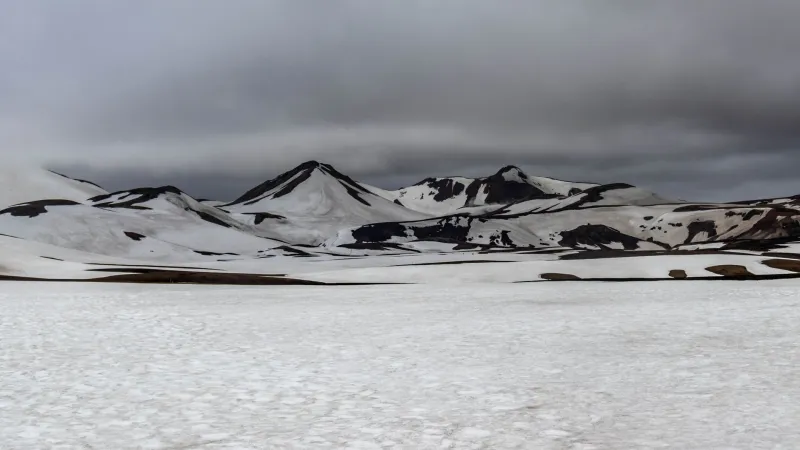
You've planned the shot for weeks. You know the GPS coordinates, the tide schedule, the rough window for golden light. You're standing at the edge of a glacier lagoon somewhere in southeastern Iceland, and everything is technically perfect. And then — nothing. The image you capture is fine. Competent. Maybe even beautiful by any reasonable standard.
But the moment that actually gets under your skin? That happened twenty minutes earlier, when you were still hiking in, hood up against the wind, not thinking about composition at all. A sudden gust shifted the air, carried something cold and ancient across your face, and for about four seconds you felt the full geological weight of where you were standing. No camera. No frame. Just you and a landscape that has been quietly doing its thing for ten thousand years.
That's Iceland being Iceland. And if you've spent any real time here, you already know what we're talking about.
The Paradox Every Serious Photographer Hits Eventually
There's a tension baked into travel photography that doesn't get talked about enough, especially in the Iceland context. You come here to see — really see — and your camera is theoretically the tool that helps you do that. But somewhere along the way, the camera can become the thing standing between you and the actual experience.
This isn't a new observation. Photographers have been wrestling with it forever. Susan Sontag wrote about it. Your photographer friends have complained about it over drinks. But Iceland makes the paradox unusually sharp, because the country has an almost aggressive way of delivering its most affecting moments off-schedule.
The aurora doesn't wait for your intervalometer to finish its sequence. The fog rolls into a lava field at exactly the wrong moment — or exactly the right one, depending on how you're looking at it. A farmer you stopped to ask directions from ends up telling you about his grandfather's relationship with a specific stretch of land, and suddenly the entire valley you've been photographing all week looks completely different to you. None of that fits in a frame.
What 'Invisible' Moments Actually Do to Your Photography
Here's the thing though: those unrecorded moments don't disappear. They accumulate. And over time, they change the way you see everything you do photograph.
Photographers who've spent serious time in Iceland — not a quick five-day swing through the Ring Road highlights, but real, slow, sometimes uncomfortable time — tend to talk about a shift that happens in how they approach the landscape. Early in a trip, you're hunting for the images you've seen before. You're mentally matching what's in front of you to a reference library built from Instagram and photo books. That's normal. That's how it starts for almost everyone.
But the invisible moments — the wind shift, the conversation, the hour you spent just sitting at the edge of a lava field because your feet hurt and you needed a break — those start to disrupt the reference library. They replace secondhand images with firsthand feeling. And that, almost more than any technical skill, is what separates photographs that have genuine weight from photographs that are merely well-executed.
Training Yourself to Notice the Gaps
So how do you actually build this into your practice without just telling yourself to "be more present" — which is advice that sounds meaningful and does approximately nothing?
A few things that actually seem to work:
Give yourself deliberate camera-off windows. Not just the first morning when you're jet-lagged and haven't found your rhythm yet. Intentional windows, built into your schedule, where the camera stays in the bag. Walk a stretch of coastline. Eat something. Talk to someone. Let Iceland talk back.
Keep a written field journal, not just a shot list. This sounds old-fashioned, but there's something about writing down what you felt in a place — not what you photographed — that forces you to pay attention to the non-visual. The smell of sulfur near a geothermal vent. The specific quality of silence inside a lava tube. These sensory details eventually find their way into how you frame and expose images, even if the connection isn't obvious.
Sit with the aftermath of a moment before you try to capture the next one. Iceland's light changes fast, and the instinct is always to chase. But sometimes the most honest response to something that just moved you is to stop, stay, and let it settle. You might miss the next shot. You'll probably gain something more valuable.
Ask questions of the land and the people on it. American travelers especially can fall into a mode of consuming Iceland as a backdrop — beautiful, dramatic, but essentially passive. The country has a living culture, working farms, communities that have been reading this landscape for generations. A ten-minute conversation with someone who actually lives here will reframe what you're looking at in ways that no amount of pre-trip research can replicate.
The Frame You Build in Your Head
There's an argument to be made — and plenty of serious photographers make it — that the most important images you take in Iceland are assembled before you ever raise the camera. Not in a planning sense, but in a feeling sense. The invisible moments are the raw material. They build a kind of internal frame, a way of seeing the place that's specific to you and your experience of it, rather than borrowed from the collective visual vocabulary of Iceland photography.
When that internal frame is strong enough, it shows. The images you make from inside that frame have a quality that's hard to name but easy to recognize. They feel inhabited. They feel like someone was actually there — not just technically present, but genuinely moved by the place.
That's what Iceland is capable of producing, if you let it. But it requires giving up a little control. It requires trusting that the moments you can't photograph are doing real work, even when — especially when — you can't see exactly what that work is.
Coming Back Empty-Handed (Kind Of)
Some trips to Iceland will feel, on the surface, like they didn't produce much. The weather was uncooperative, the auroras stayed hidden, the light was flat for days at a stretch. But ask photographers who've had those trips what they remember, and more often than not, they'll tell you about something that happened between the shots. A moment of stillness at a black sand beach with nobody else around. A conversation that reordered something in how they think about wild places.
Those trips aren't failures. They're often the ones that change photographers the most.
Iceland doesn't owe you a great image. But if you show up with enough patience and enough willingness to put the camera down occasionally, it will give you something better than a great image. It'll give you a reason to keep making them.


